
EFCC Arraigns UNIBEN Staff Over Alleged ₦3.2m Salary Fraud

By Ranti Thomas
The Economic and Financial Crimes Commission (EFCC) has arraigned a staff member of the University of Benin (UNIBEN) over allegations of involvement in a ₦3.2 million salary fraud scheme, in a case that highlights ongoing efforts to curb corruption within public institutions.
The accused was brought before a court on charges bordering on abuse of office, fraudulent diversion of funds, and salary padding, allegedly involving the manipulation of payroll systems to illegally siphon government money meant for legitimate staff payments.
According to the anti-graft agency, the alleged fraud was discovered following internal audit checks and petitions that exposed irregularities in salary payments within the institution. Investigations reportedly revealed that the sum involved in the case amounted to about ₦3.2 million.
The EFCC said the suspect is accused of unlawfully benefiting from the salary structure of the university, an act the commission described as a breach of public trust and financial regulations governing public service employment.
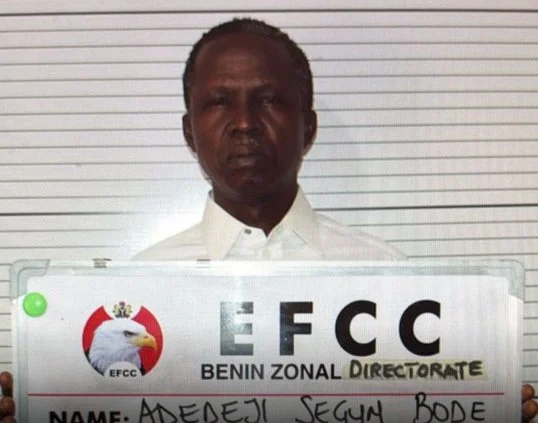
Court proceedings indicated that the accused pleaded not guilty to the charges, while the prosecution urged the court to allow for full trial to establish the facts surrounding the allegations.
The case has been adjourned for further hearing as the EFCC continues to pursue other individuals allegedly linked to similar payroll fraud schemes in public institutions across the country.
The commission has intensified its crackdown on salary fraud and financial misconduct in government agencies, universities and parastatals, where payroll manipulation has remained a recurring challenge.
Officials say such cases contribute significantly to revenue leakages in the public sector and undermine efforts to ensure transparency and accountability in government spending.
The EFCC has repeatedly warned public servants against engaging in fraudulent practices, stressing that anyone found guilty will face prosecution under Nigeria’s anti-corruption laws.
The latest arraignment adds to a growing list of cases being pursued by the agency as part of its broader campaign against financial crimes in public institutions.
 Remi Tinubu Honoured with Anambra Chieftaincy Title
  Tinubu Mourns Peter Onwubuariri, Presidential Media Aide Dies At 48
  Peter Obi’s Convoy Blocked In Benue As Sowore Condemns Incident
  Former Katsina Senator Bello Mandiya Dies At 62
  UNIZIK Lecturers Begin Indefinite Strike Over Unpaid August Salary
  Kwara Police Seek More Vehicles, Equipment To Strengthen Fight Against Crime
  2027: Governorship Campaigns Begin As Candidates Unveil Fresh Promises
  New York Student Sentenced To One Year In Dubai Prison Over Airport Incident