
 NAFDAC Intensifies Crackdown on Banned Alcohol
The National Agency for Food and Drug Administration and Control (NAFDAC) has stepped up its campaign against the circulation of banned alcoholic drinks and other unsafe consumer products, destroying goods valued at more than ₦8bn across Nigeria’s North-Central region. The destruction exercise, held in Lafia, Nasarawa State, on Thursday, October 29, 2026, involved fake, expired, adulterated, banned and unwholesome products seized from manufacturing facilities, shops, markets and motor parks across the region. A significant proportion of the destroyed items consisted of alcoholic beverages packaged in sachets and small containers of less than 200 millilitres, which NAFDAC says remain a concern because of their affordability and easy accessibility. The agency’s Director-General, Professor Mojisola Adeyeye, said the enforcement operation was part of efforts to prevent unsafe products from reaching consumers and reduce alcohol abuse, particularly among young people and schoolchildren. Adeyeye, who was represented at the event by a Deputy Director in the agency’s North-Central zone, Joseph Edor, explained that the restriction on alcoholic beverages packaged in sachets and containers below 200ml was introduced because their small sizes make them easy to carry, conceal and consume. She warned that early exposure to alcohol could affect the development of the brain and damage vital organs, including the liver and kidneys. According to her, alcohol consumption at a young age could also contribute to poor academic performance, reduced productivity, brain damage and other health complications. The NAFDAC chief said the agency’s enforcement activities were driven by concerns about alcohol abuse, addiction and the long-term effects of consuming highly concentrated alcoholic beverages in small packages. She added that the operation was not limited to alcoholic drinks, as officials also recovered expired and counterfeit medicines, adulterated food products and unsafe cosmetics. The agency said the products, valued at more than ₦8bn, were confiscated during operations targeting manufacturing outlets, distribution points, retail businesses, markets and motor parks across the North-Central region. The development comes as NAFDAC continues efforts to enforce the nationwide prohibition of alcoholic beverages packaged in sachets and small-volume PET and glass bottles below 200ml. The ban followed years of discussions between regulators, government agencies and manufacturers over the availability of small-sized alcoholic drinks and concerns about their consumption by minors. In November 2025, NAFDAC reaffirmed that full enforcement would commence from January 2026, following an earlier phase-out arrangement with manufacturers. The agency had initially allowed producers time to adjust their operations and exhaust existing stocks, but subsequently maintained that no further extension would be granted. In August 2026, NAFDAC also directed manufacturers to recall affected products from distributors, warehouses and other points in the supply chain and ensure their destruction under the agency’s supervision. Manufacturers whose facilities were sealed over the production of the prohibited drinks were required to dismantle, disable or reconfigure the affected production lines before they could be considered for reopening. The latest destruction exercise indicates that banned products were still being recovered from different points in the distribution chain despite the enforcement measures. NAFDAC’s Nasarawa State Coordinator, Dr Gyani Stephen, said the exercise was intended to protect public health rather than punish businesses or individuals. He warned traders and distributors involved in the sale of counterfeit, expired and banned products to stop the practice, stressing that the agency would take action against those who continued to violate regulatory requirements. The Nasarawa State Commander of the National Drug Law Enforcement Agency, Daniel Saidu, represented by Yakubu Awoh, also commended NAFDAC for its efforts to remove dangerous products from circulation. He warned that allowing counterfeit medicines and other unsafe goods to remain in markets could expose millions of Nigerians to serious health risks. The exercise highlights the challenge facing regulators in ensuring that prohibited products do not return to the market after enforcement operations. While the destruction of the seized goods removes a substantial quantity of unsafe products from circulation, sustained inspections, monitoring of distribution networks and prosecution of offenders will remain important to preventing further violations. NAFDAC has continued to urge manufacturers, distributors and retailers to comply with its regulations, warning that public health must take priority over commercial interests.... Read More
News
 Imo West Senate Ticket Dispute Deepens After Court Ruling
The political contest for the Imo West Senatorial District seat ahead of the 2027 general elections has taken a fresh turn following a Federal High Court judgment recognising former Imo State Governor, Rochas Okorocha, as the All Progressives Congress (APC) candidate and nullifying the nomination of incumbent Governor Hope Uzodimma. The ruling has exposed divisions within the Imo APC, with Okorocha’s camp celebrating the decision while the state chapter of the party insists that Uzodimma remains its candidate. Justice Obiora Egwuatu of the Federal High Court in Abuja delivered the judgment in a suit marked FHC/ABJ/CS/1854/2026, filed by Okorocha to challenge the outcome of the APC senatorial primary conducted on May 18, 2026. The court held that Okorocha secured the majority of lawful votes cast during the primary and was therefore entitled to the party’s ticket for the January 16, 2027 senatorial election. Justice Egwuatu consequently nullified the recognition of Uzodimma as the APC candidate and directed the party to forward Okorocha’s name to the Independent National Electoral Commission (INEC). The judge also restrained Uzodimma from presenting himself as the party’s senatorial candidate for the election. In reaching the decision, the court examined documents submitted by the APC to support the governor’s nomination and identified inconsistencies in the accounts of how the primary was conducted. One document indicated that the party used the Option A4 method, while another suggested that Uzodimma emerged through a consensus arrangement. A separate document claimed that a direct primary was conducted. The judge questioned how the party could rely on different accounts of the same exercise while also presenting figures showing votes allocated to the aspirants. He said the contradictions raised serious doubts about the documents submitted to justify Uzodimma’s nomination. The court also considered documents signed, certified and released to Okorocha following a formal request. According to the judgment, the records showed that the former governor secured the majority of lawful votes across the 10 local government areas in Imo West Senatorial District. The disputed primary had produced sharply conflicting figures. One set of results reportedly credited Uzodimma with 230,464 votes and Okorocha with 1,098 votes, while another document relied upon by the former governor indicated that he secured 150,780 votes. Justice Egwuatu held that the publication of Uzodimma’s name by INEC as the winner of the primary was wrongful and unlawful. The judge further ruled that the nomination violated Sections 29 and 32 of the Electoral Act and failed to comply with the APC’s guidelines for conducting primary elections. Okorocha’s legal team welcomed the decision, describing it as a vindication of the former governor after weeks of disagreement over the authenticity of documents connected to the primary. His counsel, O.J. Aboje, said the judgment had addressed allegations that his client relied on forged documents to challenge the governor’s nomination. Okorocha’s Special Adviser on Media, Sam Onwuemeodo, also welcomed the ruling, describing it as a victory for the judiciary, constitutional democracy and the people of Imo State. He said the celebrations that followed the judgment, particularly in Imo West, reflected the support enjoyed by the former governor. Okorocha also expressed appreciation to President Bola Tinubu, the APC leadership and residents of Imo State for their support during the legal battle. However, the judgment has not ended the political disagreement within the APC. The Imo State chapter of the party has maintained that Uzodimma remains its candidate, arguing that he won the May 18 primary with the support of party members. The party’s State Publicity Secretary, Onwuasoanya FCC Jones, said its legal department would study the judgment and determine the appropriate next steps. He urged party members and supporters to remain focused on preparations for the 2027 general elections rather than allow the dispute to distract them. The state government has also rejected the ruling. Commissioner for Information, Declan Emelumba, said Uzodimma’s camp would pursue available legal remedies at the Court of Appeal. Emelumba questioned the competence of Okorocha’s case, arguing that it was filed outside the period allowed for pre-election disputes. He said the primary was conducted on May 18, while Okorocha filed his suit on August 13, 2026. He also argued that the allegations involving disputed documents should not have been determined through the procedure adopted in the case.... Read More
 Nigeria Spends ₦5.15tn on Security as Insecurity Persists
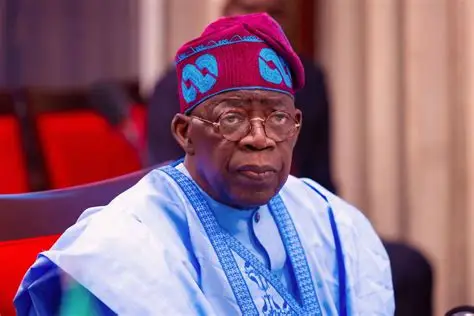
The Federal Government has disbursed ₦5.15tn in special intervention funds to the military and related security agencies between November 2023 and September 2026, raising fresh questions about the impact of the massive spending as terrorism, banditry and kidnapping continue to threaten communities across the country. Financial records from the Federation Account Allocation Committee (FAAC) show that the government received ₦5.65tn into a dedicated special intervention account during the period, with ₦5.15tn, representing 91.15 per cent of the total, subsequently disbursed. The figures reveal the scale of additional funding committed to security operations outside the regular annual budgetary allocations to the Ministry of Defence and other security institutions. However, the records do not provide a detailed breakdown of the military operations, equipment purchases, personnel expenses or specific security projects financed through the intervention programme. This absence of detailed expenditure information has brought accountability into focus, particularly as Nigerians continue to experience attacks, kidnappings and other violent crimes in different parts of the country. The document, titled Ledger of Special Intervention Programme for Nigerian Military September 2026, was prepared by the Federation Account Department of the Office of the Accountant-General of the Federation. It was presented to the Technical Sub-Committee of FAAC at its meeting in Abuja on October 14, 2026. According to the records, the ₦5.15tn was released through 30 payment transactions between November 8, 2023, and September 23, 2026. The account received funds through 33 separate transactions. The intervention programme began with a ₦100bn transfer in October 2023, representing an allocation for September of that year. The first payment of ₦100bn to the military was recorded on November 8, 2023. Another ₦100bn was received on November 20 and paid out on December 20, bringing the total amount received and disbursed by the end of December 2023 to ₦300bn. The government maintained the funding arrangement throughout 2024, with regular transfers of ₦100bn and corresponding payments to military and paramilitary agencies. Between January and December 2024, the intervention account received and disbursed ₦1.2tn, bringing cumulative receipts and payments to ₦1.5tn. The arrangement continued into 2025. During the first nine months of that year, the account received ₦900bn and disbursed the same amount, bringing cumulative payments to ₦2.4tn by September 1, 2025. The funding pattern changed significantly in 2026, when individual transfers increased from the previous ₦100bn monthly arrangement to amounts ranging between ₦200bn and ₦500bn. In March 2026, the government transferred ₦200bn from the FAAC Withheld Account. Another ₦250bn was transferred from non-oil revenue in May, while a separate payment of ₦130bn was recorded for security agencies from the FAAC Withheld Account. The ledger also contained a payment of ₦120bn to the Consolidated Pool Account II Treasury Single Account in June. Unlike other entries, the transaction was not expressly described as a payment to military or paramilitary agencies. On June 16, 2026, a ₦400bn transfer from non-oil revenue was reversed and replaced with a fresh ₦500bn transfer. The same day, ₦500bn was recorded as paid to military and paramilitary agencies. Further transfers of ₦500bn were recorded in July, August and September, with corresponding payments to the security agencies. The figures show that the intervention account received ₦3.25tn in 2026 up to October 14, compared with ₦1.2tn throughout 2024. Payments during the period reached ₦2.75tn, representing about 53.40 per cent of the total ₦5.15tn disbursed since the programme began. The ₦2.75tn paid out in 2026 was also higher than the combined ₦2.4tn disbursed between November 2023 and September 2025. Despite the large payments, the account had an outstanding balance of ₦500bn as of October 14, 2026. This represented 8.85 per cent of the total funds received. The balance followed a fresh ₦500bn transfer recorded on October 14 without a corresponding payment in the ledger. It therefore represented money remaining in the intervention account, not funds already confirmed as disbursed to security agencies. The continued security challenges across the country have intensified public interest in how the intervention funds are being used and whether the spending is producing measurable improvements. In the North-East, the military continues to confront Boko Haram and the Islamic State West Africa Province, while banditry and mass kidnappings remain major concerns in parts of the North-West and North-Central regions.... Read More
 Seven-Year Jail Term Exposes Dark Side of Football Rivalry in Argentina
An Argentine court has sentenced a football supporter to seven years and six months in prison for threatening the family of Ángel Di María in... Read More
 NSCDC Opens Disciplinary Probe as Officer Faces Sanctions Over Abuja Market Shooting
The Nigeria Security and Civil Defence Corps (NSCDC) has suspended one of its officers, Deputy Superintendent of Corps Onoja Babayo Samuel, over his alleged involvement... Read More
 UK Raises Financial Bar for Nigerian Students Seeking Study Visas
Nigerians planning to study in the United Kingdom will need to prepare more money for their visa applications as the British government increases the minimum... Read More
 Court Rejects Emeka Ike’s Privacy Claim, Says N10bn Suit Lacks Proof
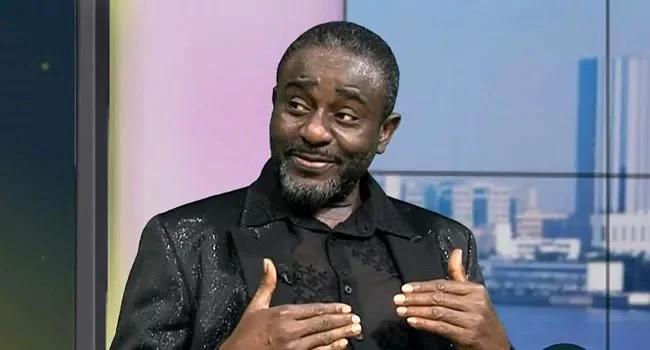
The Federal High Court in Abuja has dismissed Nollywood actor Emeka Ike’s N10 billion lawsuit against Lere Olayinka, an aide to the Minister of the... Read More
 Arik Air’s N120bn Debt Proposal Emerges in Court as Kuru Trial Continues
By Ranti Thomas Letters from Arik Air’s former chairman, Sir Johnson Arumemi-Ikhide, proposing a settlement of the airline’s debts to the Asset Management Corporation of... Read More
 Court Demands Medical Proof, Rejects KC Luxury’s Bail Bid
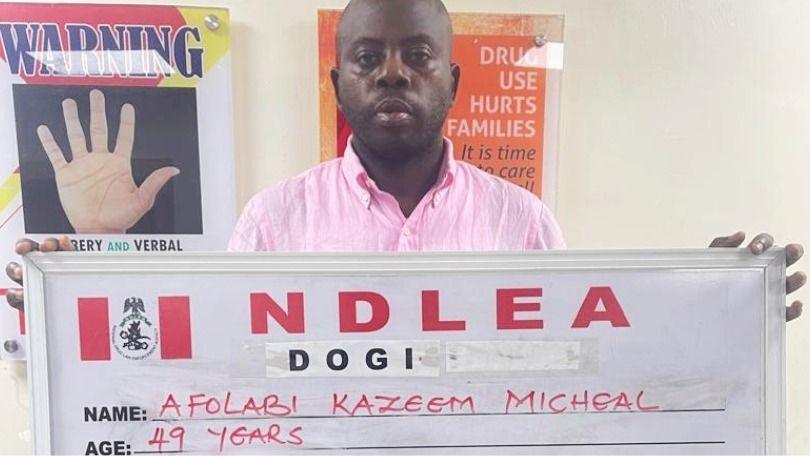
The Federal High Court in Lagos has rejected a fresh bail application by businessman and social media influencer Afolabi Michael Kazeem, popularly known as KC Luxury, over alleged cocaine trafficking and money laundering, ruling that the defence failed to provide sufficient medical evidence to justify his release. Justice Musa Kakaki delivered the ruling on Wednesday, October 28, 2026, while ordering an accelerated hearing of the case involving the alleged trafficking of 184.5 kilogrammes of cocaine. The judge held that the defence had not established special circumstances to warrant bail on medical grounds, particularly because the application lacked a medical certificate and an expert assessment explaining why Kazeem could not receive treatment while in custody. “There is no medical certificate to warrant the court to grant him bail,” Kakaki said. The court, however, directed the Ikoyi Custodial Centre to ensure that Kazeem had unrestricted access to doctors and medical specialists for any treatment required. Kazeem’s lawyer, Chief Emefo Etudo, had asked the court to release his client so he could receive specialised medical care at the Lagos University Teaching Hospital (LUTH). Etudo argued that Kazeem’s health had deteriorated and raised concerns about a reported collapse of his lungs, which he said was disclosed by the Police Hospital in Falomo, Lagos. The defence had also relied on photographs and other medical-related exhibits to support its application. However, Justice Kakaki said the materials did not provide sufficient grounds for the court to grant bail. In reviewing the evidence, the judge referred to exhibits AK5, AK6 and AK8, which included photographs of a person lying on a hospital bed and receiving treatment. Kakaki also recalled an earlier ruling delivered on October 2, 2026, in which the court noted a recommendation for Kazeem to be examined by a consultant respiratory physician or pulmonologist. The proposed assessment was intended to evaluate his condition, improve his treatment and help prevent further acute episodes. The judge said the recommendation did not, by itself, establish that Kazeem was suffering from an illness that could not be treated while in custody. “Having gone through the records of the court and compared the ruling of October 2, 2026, I hereby discountenance all the exhibits,” the judge said. The court also questioned the defence’s argument that Kazeem required specialised treatment at LUTH, noting that the same hospital was being proposed as the facility where he should receive care if released. The prosecution opposed the bail application. Counsel to the prosecution, Abu Ibrahim, argued that the medical information presented by the defence did not sufficiently justify Kazeem’s release. Ibrahim said the ailment referred to in the application was asthma, although the defence maintained that the condition had become more serious. He also argued that the defence had not presented a medical document from LUTH showing that the hospital could not manage Kazeem’s condition or explaining why release from custody was necessary for treatment. When the matter was called on Wednesday, a correctional officer from the Ikoyi Custodial Centre, Adeleye Akin, informed the court that Kazeem was still at the Police Hospital in Falomo. Justice Kakaki further held that the defence had failed to show a change in circumstances sufficient to justify another bail application. He recalled that the court had ordered Kazeem’s remand in a custodial centre on October 16, 2026. The judge said a person seeking bail on medical grounds must present clear and convincing evidence to show why release is necessary. He added that where specialist care is required, an expert should explain the nature of the illness and the treatment needed. “There was nothing stopping the Correctional Centre from calling an expert to attend to the first defendant, or using the first defendant’s doctor if he had one,” Kakaki said. In refusing the application, the judge directed that the case should proceed without unnecessary delay. He also emphasised that the denial of bail must not prevent Kazeem from receiving appropriate medical attention. The ruling means Kazeem will remain in custody while the criminal proceedings continue, subject to the court’s order granting him access to doctors and medical specialists. Kazeem is standing trial alongside Boniface Freeman Ochoche Sule and Ikechukwu Ekugo Patriarch over allegations involving 184.5 kilogrammes of cocaine and money laundering. The allegations remain before the court, and the defendants have yet to be convicted in the case. Justice Kakaki adjourned the matter until November 2, 2026, for the commencement of trial, with an order that the proceedings be accelerated.... Read More
President Bola Tinubu has said Nigeria must turn its ongoing economic reforms into better jobs, higher productivity and improved living standards, stressing that the country’s... Read More
 NAFDAC Intensifies Crackdown on Banned Alcohol
 Sir Patrick Stewart Dies at 86 After Battle With Dementia