
CJN Warns Judges Against Political Bias, Forum Shopping Ahead of 2027 Elections
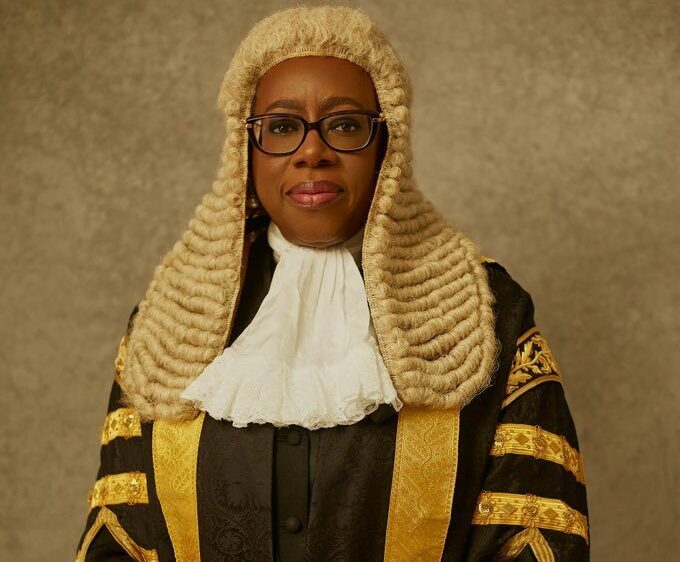
Chief Justice of Nigeria (CJN), Justice Kudirat Kekere-Ekun, has warned judges and lawyers against conduct that could undermine public confidence in the judiciary ahead of the 2027 general elections, urging judicial officers to remain impartial and legal practitioners to avoid forum shopping in politically sensitive cases.
Kekere-Ekun gave the warning on Monday, October 12, 2026, while delivering her address at the special session of the Supreme Court of Nigeria marking the commencement of the 2026/2027 Legal Year in Abuja.
She said the approaching electoral season would bring increased political activity and disputes with significant consequences for individuals, political parties and the country, making restraint, professionalism and strict adherence to the law particularly important.
The CJN stressed that judges must avoid political associations or conduct capable of creating an appearance of partiality, reminding judicial officers that their actions and statements would attract heightened scrutiny during the election period.
She also cautioned lawyers against forum shopping, which involves deliberately initiating cases in courts or divisions perceived to be favourable to a particular party, as well as filing multiple proceedings seeking substantially similar reliefs. According to her, such practices can produce conflicting court orders, disrupt the orderly administration of justice and expose the judiciary to unnecessary embarrassment.
Kekere-Ekun urged counsel to disclose related cases already pending before other courts and respect the jurisdiction and proceedings of those courts, emphasising that their professional responsibilities extend beyond securing immediate advantages for clients.
She warned that the growing volume of political litigation must not overwhelm the courts to the point that other cases are delayed or denied timely attention.
“The Judiciary must remain available to all litigants, and the urgency or public prominence of political litigation should not come at the expense of other legitimate claims awaiting determination,” she said.
The CJN also condemned the use of social media to intimidate, ridicule or harass judges, lawyers and court employees over professional disagreements. She said criticism of judgments and complaints about misconduct should be pursued through appropriate channels rather than through threats or personal attacks.
According to her, the administration of justice cannot be left to anger, intimidation or what she described as trial by social media. She maintained that judges must be able to decide cases according to the law without fear of personal retaliation.
Kekere-Ekun said protecting the dignity of the legal profession was a collective responsibility of the Bench and the Bar, particularly at a time when public confidence in judicial institutions remained essential to the country’s democratic process.
Beyond the warning ahead of the elections, the CJN disclosed that the Supreme Court handled 2,456 matters during the 2025/2026 Legal Year and delivered 411 judgments, reflecting an increase in its workload compared with the preceding legal year.
The matters comprised 1,179 general civil motions, 573 criminal motions, 13 Sharia-related motions and 676 appeals. The appeals included 433 general civil appeals, 212 criminal appeals, 19 political appeals, 12 Sharia appeals and 10 originating summons.
She compared the figures with the preceding Legal Year, when the Court handled 2,280 matters and delivered 369 judgments and rulings. While describing the latest performance as encouraging, she acknowledged that significant work remained to be done to address delays and clear pending cases.
To tackle the backlog, Kekere-Ekun said the Court had introduced more deliberate case-management measures, including prioritising older cases, reviewing pending matters and removing concluded cases from the active docket.
She also disclosed that special panels had been established to focus on selected categories of cases involving Sharia matters, the Economic and Financial Crimes Commission (EFCC), the Asset Management Corporation of Nigeria (AMCON), the Federal Inland Revenue Service (FIRS) and the Legal Practitioners Disciplinary Committee (LPDC).
The panels were assigned 141 matters, comprising 47 motions and 94 appeals. Of these, 43 related to Sharia matters, 52 to EFCC cases, 21 to AMCON matters, 10 to FIRS cases and 17 to LPDC proceedings.
The CJN said the targeted approach was intended to facilitate faster consideration of the cases and complement broader efforts to reduce delays in the administration of justice.
She emphasised that the judiciary must balance the need to resolve politically sensitive disputes promptly with its wider responsibility to ensure that every litigant receives fair and timely consideration. With the 2027 elections approaching, she urged judges and lawyers to uphold professional standards, respect judicial procedures and protect the integrity of the courts.
The CJN’s address placed judicial impartiality, responsible legal practice and efforts to improve case disposal at the centre of the Supreme Court’s priorities for the 2026/2027 Legal Year.
 Olugbenga Ajala Becomes SAN with 68 others
  Nigeria’s Inner Bar Expands as CJN Admits 68 New Senior Advocates
  Makinde’s Inner Circle Faces Fresh Shake-Up as Chief of Staff Segun Ogunwuyi Resigns
  Chief Akinfolabi Akindele Honoured by Ansar-Ud-Deen Society
  World Bank Report Highlights Nigeria’s Economic Recovery, but Living Standards Remain Key Test
  2027 Election: Missing Candidates, Party Disputes Raise Questions Over INEC List
  Adun-ni Initiative Set to Launch in Lagos, Pledges Stronger Support for Sickle Cell Warriors