
Fort Hood Shooter Set for Historic Military Execution as US Army Revives Firing Squad
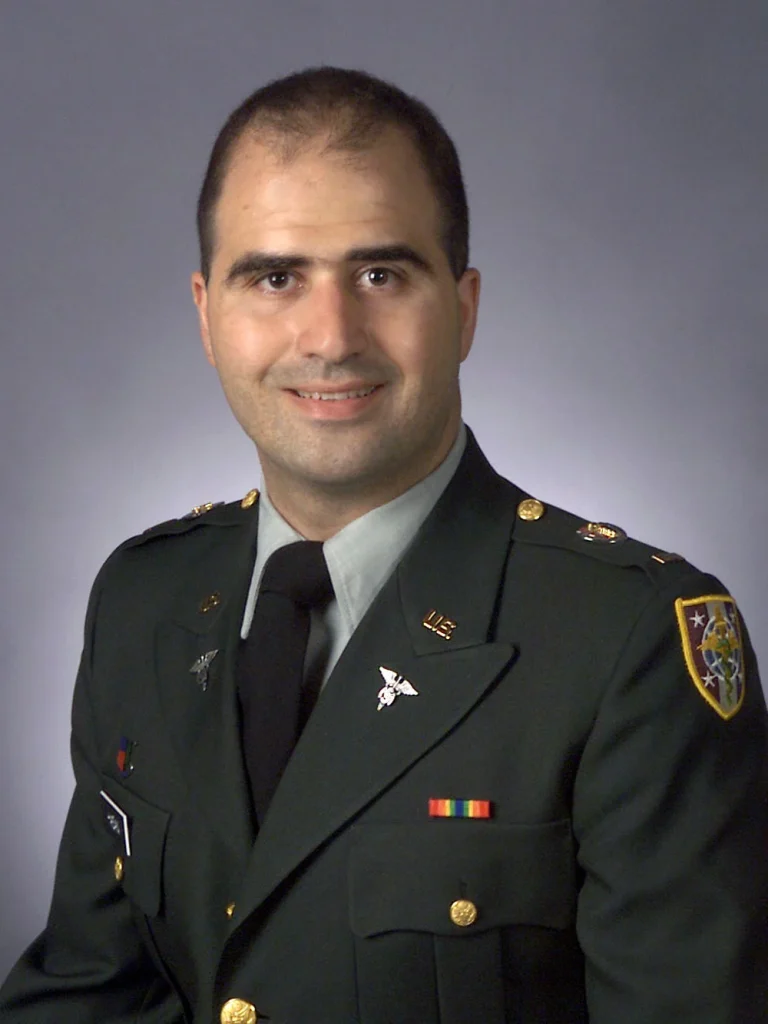
More than 17 years after the deadly shooting at Fort Hood, Texas, the case of former US Army Major Nidal Malik Hasan has reached a new stage, with the military preparing to carry out his death sentence by firing squad.
Hasan, a former Army psychiatrist, has been scheduled for execution on December 3, 2026, at Fort Hood, the same military installation where he carried out the 2009 shooting that left 13 people dead and 32 others wounded. The execution is expected to be the first carried out by the US military in more than six decades.
President Donald Trump approved the execution after Defense Secretary Pete Hegseth recommended that Hasan be put to death by an Army firing squad. Acting Army Secretary Adam Telle subsequently set December 3 as the execution date and designated Fort Hood as the location.
The decision has brought renewed attention to a military death penalty system that has remained largely dormant for decades. The US military last carried out an execution in 1961, when Army Pvt. John Bennett was hanged at Fort Leavenworth after being convicted of rape and attempted murder. The last known US military firing-squad execution took place in 1945, when Army Pvt. Eddie Slovik was executed for desertion during World War II.
Hasan was sentenced to death by a military jury in 2013 after being convicted of 13 counts of premeditated murder and numerous counts of attempted premeditated murder stemming from the Fort Hood attack.
On November 5, 2009, Hasan entered a medical processing center at the sprawling Texas base and opened fire on soldiers who were preparing for deployment. Investigators and witnesses said he shouted “Allahu Akbar” before beginning the attack. Thirteen people were killed, including 12 service members and one civilian, while 32 others were wounded.
Hasan was eventually shot and wounded by a civilian police officer responding to the attack, leaving him paralysed from the chest down. He was subsequently arrested and placed on trial before a military court.
During the court-martial, Hasan represented himself and made little effort to dispute the central facts of the case. He acknowledged carrying out the shooting and told the court that he believed he was acting to prevent American soldiers from deploying to Afghanistan and killing Muslims. He described himself as a soldier who had “switched sides.”
The case remained in the military justice system for years after his conviction as mandatory appeals were pursued. The Army Court of Criminal Appeals upheld his death sentence in 2020, while the US Court of Appeals for the Armed Forces upheld it in 2023. The US Supreme Court declined to review the case in March 2025.
The planned execution is particularly significant because the firing squad is an extremely rare method of capital punishment in the United States. The method remains authorised in only a small number of states, while its use by the military has effectively disappeared from the American justice system for generations.
The choice of firing squad also comes at a time when the US is facing renewed debate over methods of execution. Difficulties obtaining lethal-injection drugs and problems with administering lethal injections have prompted authorities in some jurisdictions to consider alternative methods. The recent failed execution attempt involving Tennessee death-row inmate Christa Pike, who survived the state’s lethal-injection procedure and later regained consciousness, has further intensified scrutiny of execution procedures.
If Hasan’s execution goes ahead as scheduled, it will represent a historic return of military capital punishment after a 65-year absence. It would also be the first US military firing-squad execution since 1945.
However, the December 3 date does not necessarily guarantee that the execution will take place on that day. Hasan retains the ability to pursue further legal challenges in federal court, including a habeas corpus petition that could potentially delay the execution.
Hasan is currently being held on military death row at the US Disciplinary Barracks at Fort Leavenworth, Kansas. He is one of four prisoners currently under military death sentences.
For the families of those killed and the survivors of the 2009 attack, the scheduled execution marks a significant development in a case that has remained unresolved for nearly 17 years. For the US military, however, it represents something much broader: the return of an execution system that has not been used since the early 1960s, with a method of execution that the Army has not employed since the final months of World War II.
The final chapter of the Fort Hood case is therefore set to take place at the same base where the tragedy began, unless Hasan’s remaining legal options prevent the scheduled execution from going ahead.
 Centenary: Scholars Urge Leaders to Embrace Kamalu-Deen’s Legacy of Education
  Christa Pike Regains Consciousness After Failed Execution as Tennessee Faces Mounting Questions
  NAF Confirms 25 Dead in Ondo Crash, Releases Full List of Victims
  INEC Moves to Improve Staff Welfare Ahead of 2027 Elections
  NAFDAC Cracks Down on Hidden Stockpiles as N300m Banned Alcoholic Drinks Seized in Lagos
  Fort Hood Shooter Set for Historic Military Execution as US Army Revives Firing Squad
  Obi Changes Position on Fuel Subsidy, Says Corruption Must End Before Its Return