
CNG Investment Tops $2.5bn as Nigerians Wait for Promised Transport Fare Cuts
By Wellington Jopelo
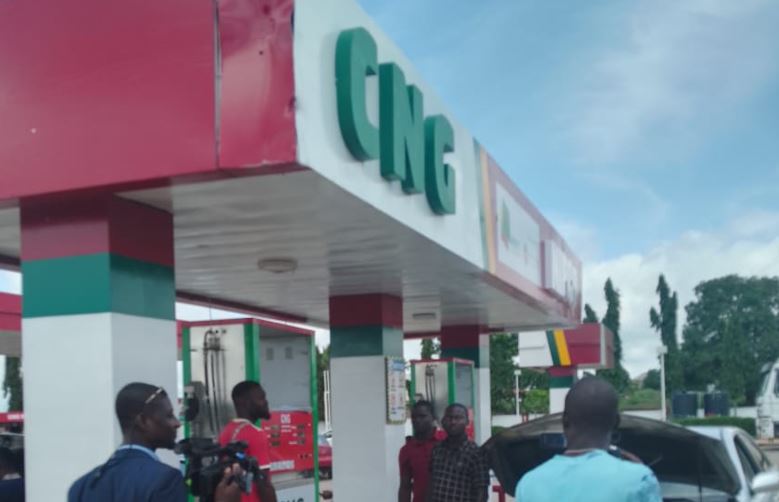
The Federal Government’s drive to expand Compressed Natural Gas (CNG) transportation has attracted more than $2.5bn in private-sector investment, but commuters across several states are still waiting for the promised reduction in transport fares to become a reality.
The investment, channelled into refuelling infrastructure, vehicle conversion centres, vehicle assembly and other parts of the CNG value chain, is intended to make alternative-fuel transportation more accessible and reduce the cost of operating commercial vehicles. However, the central challenge remains ensuring that the savings made by transport operators translate into lower fares for passengers.
The Presidential Initiative on Compressed Natural Gas and Electric Vehicles has begun engaging state governors, transport unions and commercial fleet operators to establish fare-reduction arrangements on designated routes. The initiative also plans to introduce stickers displaying approved routes and fares on buses deployed under its programme, allowing passengers to know how much they should pay before boarding.
Onyekachi Eke, Head of Brand and Communications at the initiative, said the government was working with state authorities and transport operators to enforce the reductions. She acknowledged, however, that the benefits had yet to reach every route or commuter.
The initiative reported that passengers were already benefiting from reductions on some routes. In Abuja, CNG-converted commercial vehicles operating through a partnership with the National Union of Road Transport Workers were offering fare reductions of 40 per cent on designated routes. Similar reductions were reported in Borno, Enugu, Niger and Abia states.
President Bola Tinubu had earlier directed state governments to work towards lowering transport fares from October 1, using cheaper energy sources, particularly CNG and electricity. The President argued that lower fuel costs should lead to lower transport charges, especially following the removal of the petrol subsidy.
Tinubu also disclosed that more than 120,000 vehicles had been converted to CNG, with additional conversion kits being processed. The government has further announced plans to expand refuelling infrastructure, including a target of 1,000 CNG stations nationwide.
The Federal Government has supported the initiative through vehicle and conversion-kit procurement, conversion incentives, infrastructure development and training. However, officials have distinguished the more than $2.5bn in private investment mobilised for the CNG value chain from direct government expenditure, saying a consolidated figure for federal spending would be provided separately.
Despite the expansion, implementation remains uneven. In some states, authorities are still working towards deploying CNG-powered buses and establishing the infrastructure needed to operate them, while many commuters continue to rely on petrol-powered commercial vehicles.
Transport costs remain a major concern for passengers facing steep increases in fares on inter-state and local routes. In Imo State, a driver identified as John complained that journeys from Owerri to Umuahia had risen to as much as ₦4,500 from ₦2,000 previously, while some operators charged ₦7,000 for travel from Owerri to Enugu, compared with the earlier fare of ₦2,000.
The experience highlights the difficulty of achieving nationwide fare reductions through cheaper fuel alone. Vehicle availability, conversion expenses, access to refuelling stations, maintenance costs and the participation of private transport operators all affect whether savings can be passed on to passengers.
In Kano State, the government said it was pursuing the programme in collaboration with the Federal Government. The state also disclosed that it had procured 500 electric tricycles as part of efforts to reduce transport costs and emissions. However, the operational status of 40 CNG buses reportedly delivered to Kano in June remained unclear.
Taraba State is also working with the Federal Government to procure CNG and electric buses, with mobile CNG stations and electric charging points expected to be installed by November, according to the state’s Commissioner for Transport and Aviation, Yakubu Samaila.
In Kogi State, the government budgeted ₦1bn for CNG buses and electric vehicles in its 2026 fiscal year, but the funds had yet to be made available.
The initiative is also pursuing measures to extend affordable transportation to students through Project Sprout, which plans to provide buses to 20 universities in its first phase. Officials have also disclosed public awareness campaigns and a proposed partnership with ride-hailing platform inDrive to encourage vehicle conversion and help passengers identify CNG-powered cars.
However, the initiative has acknowledged concerns that some drivers using cheaper gas still charge passengers fares comparable to those charged by petrol-powered operators. It says its engagement with states, unions and commercial fleet owners is intended to address the problem and ensure that the savings reach commuters.
Tinubu has cited examples of lower fares on selected routes, including a journey from Masaka to Berger in the Federal Capital Territory that reportedly fell from ₦1,500 to ₦500, and the Enugu-Nsukka route, where fares reportedly dropped from ₦4,000 to ₦1,600.
While such examples demonstrate the potential of the programme, the uneven rollout means that many Nigerians are yet to experience similar reductions. The introduction of route and fare stickers is expected to improve transparency, although the initiative has not disclosed specific penalties for operators who disregard approved fares.
The government’s challenge is now to move beyond investment figures and the growing number of converted vehicles to measurable relief for passengers. Expanding infrastructure, improving access to CNG, deploying more affordable buses and establishing effective monitoring arrangements will be critical to achieving that goal.
For commuters struggling with rising living and transportation costs, the success of the CNG programme will ultimately be judged not by the amount of investment attracted or the number of vehicles converted, but by whether they can travel more cheaply and consistently.
 Africa’s Future Depends on Building Institutions That Serve Its Own Development Needs — Abdou Samb
  Kosoko Royal Family Disowns TBT Properties, Abiola Olojo-Kosoko, Reaffirms Chief Akindele’s Authority on Ogombo Land
  Wike Builds Cross-Party Alliance for Tinubu’s 2027 Bid, Takes Charge of FCT Campaign
  Olugbenga Ajala Becomes SAN with 68 others
  CJN Warns Judges Against Political Bias, Forum Shopping Ahead of 2027 Elections