
Centenary: Scholars Urge Leaders to Embrace Kamalu-Deen’s Legacy of Education

Nigerian scholars have used the centenary celebration of an Islamic and Arabic school founded by the late Sheikh Muhammad Kamalu-Deen Al-Adabbiy to call for greater investment in education and leadership that puts public service ahead of personal interests.
The scholars made the call in Ilorin, Kwara State, during a media briefing ahead of a week-long programme marking 100 years of the Az-Zumratul Adabiyatul Kamaliyyah School of Arabic and Islamic Studies, established by Sheikh Kamalu-Deen.
Rather than focusing solely on his religious achievements, the scholars highlighted the late cleric’s approach to education and institution-building, particularly his efforts to combine Islamic learning with Western education. They said his model produced generations of scholars, professionals and community leaders and remains relevant to Nigeria’s educational challenges today.
The school’s spokesperson, Prof. Kamil Kamaldeen, described Sheikh Kamalu-Deen as a leader whose policies were non-discriminatory and whose emphasis on service and collaboration offered lessons for contemporary leaders.
According to the scholars, Sheikh Kamalu-Deen believed education was a tool for advancing society and worked to establish educational structures while encouraging people to acquire both religious and Western knowledge.
His educational vision eventually contributed to the development of institutions associated with the Ansarul Islam Society of Nigeria, including Muhammad Kamalud-deen University in Ilorin. The university describes itself as a product of the society’s long-standing efforts to expand education in Nigeria.
Born in 1905, Sheikh Kamalu-Deen became one of Nigeria’s prominent Islamic scholars and educational pioneers. He also served as a councillor and member of the Ilorin Native Authority transition committee between 1958 and 1961 and was later appointed the first Grand Mufti of Ilorin.
He died in 2005 at the age of 100, leaving behind a legacy spanning Islamic scholarship, education, institution-building and leadership.
As the centenary activities begin, the scholars said the most important way to honour his memory is not merely by celebrating his past achievements but by applying the principles that shaped his work, particularly investment in education, skills development, cooperation and selfless leadership.
 MTN Outage Hits Five States, Leaves Customers Waiting for Service Restoration
 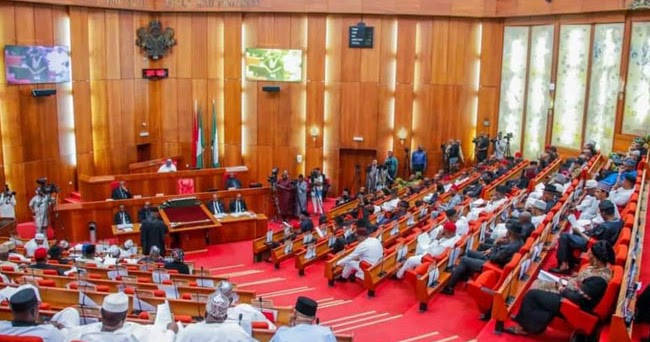 Reps Move to Protect NELFUND Benefits as Institutions Face Sanctions
  FG Targets Transport Costs With 30-Day Petrol Discount at NNPC Stations
  Amnesty Challenges Madonna University Sanctions, Seeks Second Chance for Nursing Students
  Army Converts Old Oyo National Park Into Training Ground After School Abduction
  FG Tightens Grip on Federal Projects, Contractors Face EFCC, ICPC Probe