
Christa Pike Regains Consciousness After Failed Execution as Tennessee Faces Mounting Questions
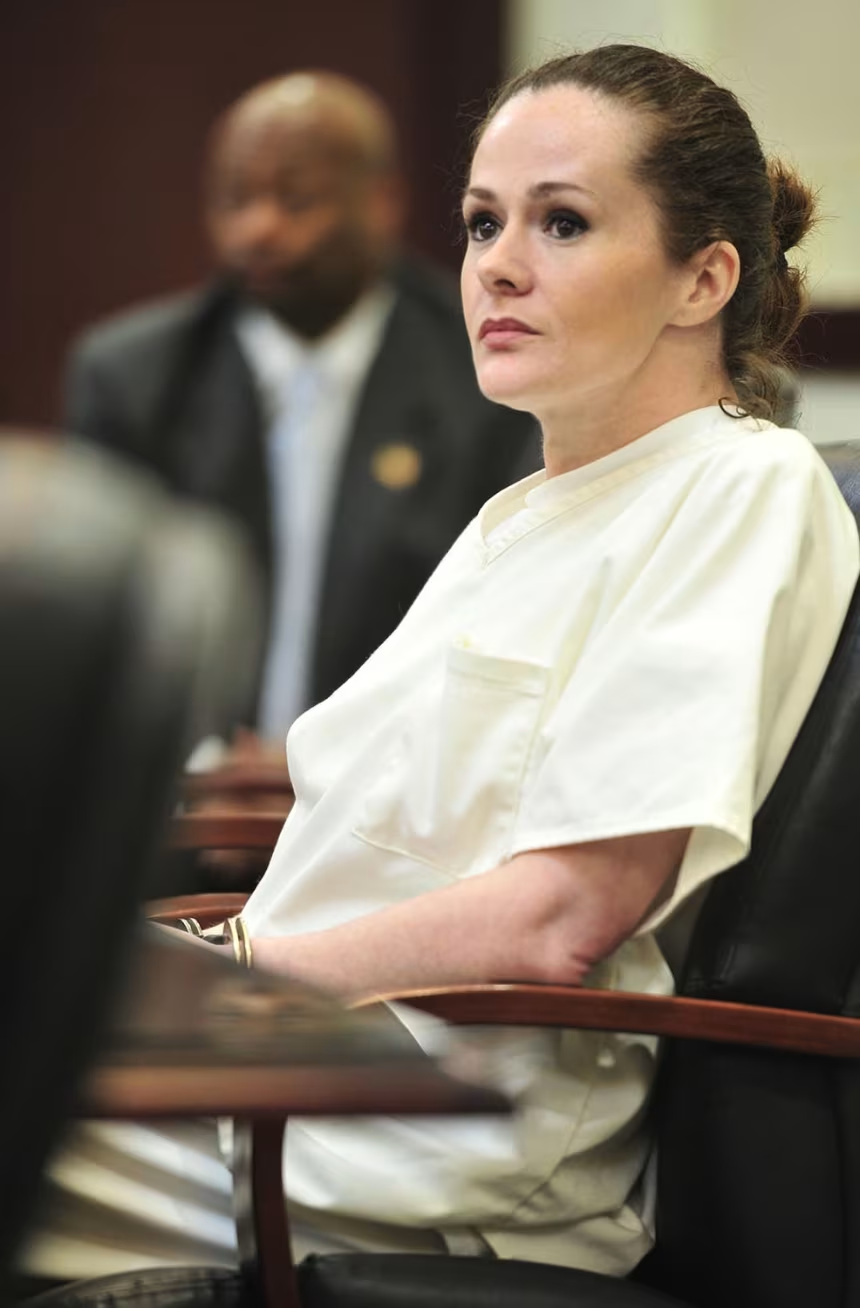
Tennessee death row inmate Christa Pike has regained consciousness and is speaking from her hospital bed, six days after the state’s attempt to execute her by lethal injection failed, in a development that has added a new and unexpected chapter to one of the most unusual execution cases in recent US history.
Pike, 50, remains in critical medical care following the September 30 execution attempt at the Riverbend Maximum Security Institution in Nashville. Her lawyers said Tuesday that she is now conscious and able to speak, although her long-term prognosis remains uncertain and doctors expect her recovery to be lengthy.
“Against all odds, Christa Pike is conscious, speaking, and continues to receive critical medical care,” her attorneys said in a statement. They added that she had suffered severe injuries to her arms during the execution attempt and remains handcuffed and shackled to her hospital bed.
The latest development follows a failed lethal injection that has already triggered an independent review of Tennessee’s execution procedures and led Governor Bill Lee to halt further executions in the state. The governor ordered a comprehensive third-party investigation to establish what went wrong during the attempt to put Pike to death.
Pike had been scheduled to become the first woman executed in Tennessee in about 200 years. She was sentenced to death for the 1995 murder of 19-year-old Colleen Slemmer, a former classmate, and has remained on death row for decades.
The execution attempt became increasingly complicated after prison officials struggled to establish intravenous access. According to reports, members of the execution team used multiple needles while attempting to find suitable veins before administering two doses of pentobarbital, the sedative used in the state’s lethal injection protocol. Pike’s lawyers had previously warned authorities about difficulties with her veins.
Despite receiving two doses, Pike did not die. Witnesses reported that she remained alive and was still breathing, with one witness describing an extraordinary scene in which her breathing could be heard after the drugs had been administered. The execution was eventually abandoned, and Pike was transported to hospital for emergency medical treatment.
Her lawyers later said she was unconscious and, on a ventilator, while medical personnel worked to treat the effects of the drugs. Her condition remained largely unknown until the latest statement confirming that she had regained consciousness and could speak.
The circumstances have raised questions about Tennessee’s execution procedures, particularly how the state handled the failure of the lethal injection. The Tennessee Department of Correction has maintained that the execution was conducted under its approved protocol, which permits a second injection when an inmate remains alive after the first.
However, the situation has become the subject of an independent investigation. Tennessee’s prison commissioner, Frank Strada, announced his resignation following the incident, while Governor Lee suspended further executions as authorities examine what happened.
Pike’s legal team is also taking steps to preserve evidence from the attempted execution. Her lawyers have asked a court to ensure that physical, written and electronic records connected to the procedure are retained as questions continue over the administration of the drugs and the problems encountered with intravenous access.
The legal consequences of Pike’s survival could also become significant. Her attorneys are asking Governor Lee to commute her death sentence to life imprisonment without the possibility of parole, arguing that the failed execution and the suffering she endured should remove the possibility of another attempt to execute her.
The case has therefore moved beyond a question of whether an execution succeeded or failed. It now involves questions about Pike’s medical recovery, the conduct of the execution team, the state’s procedures and whether Tennessee can legally or practically attempt to carry out another execution after the first one ended with Pike surviving.
For now, Pike remains hospitalized and under medical supervision. Her attorneys have described her recovery as medically unprecedented, but cautioned that it is too early to determine what her long-term condition will be.
The development has also renewed attention on the wider debate surrounding capital punishment in the United States, particularly the reliability and safety of lethal injection procedures. Pike’s case is unusual because she survived after receiving the drugs intended to end her life, leaving Tennessee facing an unprecedented situation as officials investigate the failed execution.
A court hearing has been scheduled as Pike’s lawyers seek to preserve evidence and obtain more information about the execution attempt. Meanwhile, the state’s independent review is expected to examine the actions of the execution team and determine how a procedure that Tennessee says followed its established protocol ended with a death row inmate surviving and later regaining consciousness.
 Centenary: Scholars Urge Leaders to Embrace Kamalu-Deen’s Legacy of Education
  Fort Hood Shooter Set for Historic Military Execution as US Army Revives Firing Squad
  NAF Confirms 25 Dead in Ondo Crash, Releases Full List of Victims
  INEC Moves to Improve Staff Welfare Ahead of 2027 Elections
  NAFDAC Cracks Down on Hidden Stockpiles as N300m Banned Alcoholic Drinks Seized in Lagos
  Christa Pike Regains Consciousness After Failed Execution as Tennessee Faces Mounting Questions
  Obi Changes Position on Fuel Subsidy, Says Corruption Must End Before Its Return