
Professor Oshodi: Olukoyede Building EFCC That Can Outlive Him
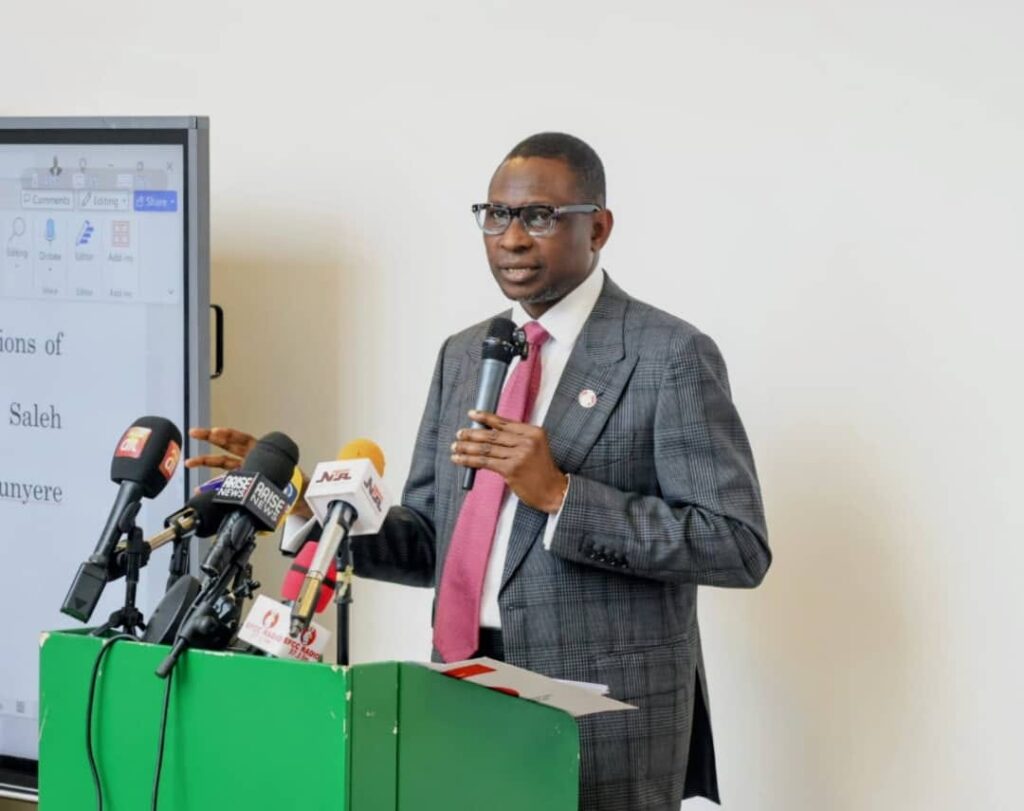
Nigerian-American forensic psychologist and criminal justice expert, Professor John Egbeazien Oshodi, has praised the Chairman of the Economic and Financial Crimes Commission, Ola Olukoyede, describing him as a leader who is focused on building a stronger institution rather than making himself the centre of the agency.
Oshodi said Olukoyede’s leadership should be judged by what he leaves behind at the EFCC, particularly whether the commission becomes more professional, transparent, independent and capable of functioning effectively after his tenure.
According to the professor, Olukoyede has placed considerable attention on strengthening the skills of young investigators and improving the systems used by the commission to tackle financial crimes.
He said the EFCC chairman’s approach goes beyond making arrests and prosecuting cases, as the commission also needs to develop stronger investigative methods, asset-tracing capacity and preventive measures.
Oshodi said this approach was important because financial crimes are becoming more sophisticated, with criminals increasingly using technology, complex business structures, digital assets and international financial networks to conceal illicit funds.
He pointed to Olukoyede’s recent participation in the 43rd Cambridge International Symposium on Economic Crime in the United Kingdom, where the EFCC chairman reportedly disclosed that the commission had secured the forfeiture of cash and assets worth more than $500 million to the Federal Government.
For Oshodi, however, the value of Olukoyede’s work should not be measured only by the amount of money recovered or the number of cases brought before the courts.
He argued that the bigger question is whether the EFCC is developing the people, procedures and professional standards needed to continue fighting corruption effectively in the future.
The professor described this as the difference between a leader who builds a personal reputation and one who builds an institution that can survive without him.
He said Nigeria needs public institutions that are strong enough to continue delivering their responsibilities regardless of who occupies the leadership position at any particular time.
Oshodi also highlighted the importance of due process in the EFCC’s work, saying the commission must investigate suspected financial crimes thoroughly while allowing the courts to determine whether the evidence meets the legal requirements for conviction or forfeiture.
He referred to the case involving properties allegedly connected to former Attorney-General of the Federation and Minister of Justice, Abubakar Malami, where investigators traced 57 properties but the court ordered the final forfeiture of only 48.
The court declined to forfeit the remaining nine properties after finding that the EFCC had not sufficiently established their connection to unlawful activity, a development Oshodi said demonstrated why judicial oversight remains important.
He said the EFCC has the right to challenge decisions it believes are legally incorrect through the proper appeal process, rather than attempting to bypass the courts.
Oshodi also addressed criticism that the EFCC could be engaging in selective prosecution, saying such concerns should be taken seriously but should not automatically stop investigations where credible evidence exists.
He argued that the proper solution to concerns about unequal enforcement is to ensure that credible allegations are investigated consistently, regardless of the identity, status or political connections of the people involved.
At the same time, he warned that the EFCC must not become immune from criticism simply because its chairman is regarded as a person of integrity.
According to Oshodi, the commission must continue to guard against political interference, unequal treatment, unlawful detention, poor handling of evidence and other practices that could damage public confidence in its work.
He said the reputation of any anti-corruption agency ultimately depends on the fairness and professionalism with which it handles cases, rather than the personality of its chairman.
The professor placed particular importance on the development of young officers, saying the EFCC needs investigators who are properly trained in areas such as forensic accounting, cybercrime, digital evidence, cryptocurrency, intelligence gathering, asset tracing and international financial investigations.
He said building such professional capacity would give the commission the ability to confront financial crimes that increasingly cross national borders and involve sophisticated digital systems.
Oshodi also backed Olukoyede’s emphasis on preventing corruption before it happens, arguing that Nigeria cannot rely entirely on arrests and prosecutions to solve its corruption problem.
He said stronger procurement procedures, effective audits, beneficial ownership records, suspicious transaction monitoring and better internal controls are necessary if public funds are to be protected.
The professor further called for stronger protection for whistleblowers and greater cooperation between the EFCC and banks, professionals, government officials, journalists, international organisations and members of the public.
He said the fight against financial crime is too broad for one agency to handle alone and requires cooperation from different sectors of society.
Oshodi ultimately said Olukoyede’s most important legacy would not be his media visibility or personal reputation but whether he succeeds in leaving behind an EFCC that is stronger, more professional, transparent and resilient.
He maintained that if the commission can continue operating effectively after Olukoyede leaves office, it would be a stronger indication of the impact of his leadership than any personal recognition he may receive.
Oshodi described Olukoyede as a “man of integrity”, but stressed that integrity must continue to be matched with accountability, professionalism and respect for the law.
He said the real achievement would be an EFCC that no longer depends on the personality of one chairman, but has the systems, personnel and institutional strength to continue its anti-corruption work for generations.
 FG Restricts Air Travel for 46 Contacts
  Nigeria Faces Rare Ebola Strain as Officials Intensify Efforts to Contain Abuja Case
  NDLEA Uncovers Mexican Cartels’ Alleged Plan to Make Nigeria a Meth Production Hub
  Fasoranti: A Century of Service, From Awolowo’s Political School to Afenifere Leadership
  After 40 Years Apart, Fatai Okoya Makes Emotional Plea to Reunite With Billionaire Father
  Prince Harry Signals Fresh Push for Royal Family Reconciliation