
Reps Probe ‘Fake Agency’ Accounts As CBN Says They Hold Zero Balance
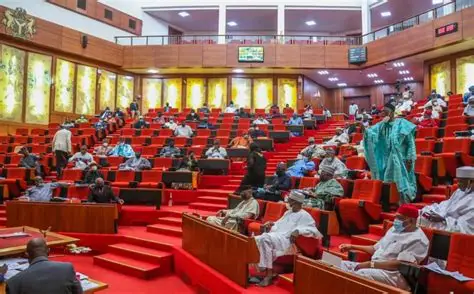
The House of Representatives has intensified its investigation into the controversial Presidential Foreign Investment Promotion Council (PFIPC) after the Central Bank of Nigeria (CBN) disclosed that bank accounts opened for the agency have never received or disbursed any funds.
The revelation was made during an investigative hearing by the House Ad-hoc Committee probing the alleged establishment and operations of the council without a valid legal framework.
Representing the CBN Governor before the committee, Hamisu Abdullahi, a director at the apex bank, explained that the CBN only opens accounts for federal government agencies after receiving formal approval from the Office of the Accountant-General of the Federation (OAGF).
He told lawmakers that the bank received a directive from the OAGF on July 29, 2025, instructing it to open two domiciliary accounts—one in United States dollars and another in British pounds sterling—for the Presidential Economic Advisory Council/Presidential Foreign Investment Promotion Council.
According to Abdullahi, the accounts were opened the following day but have remained inactive because the council failed to submit the authorised signatories required before any transaction could take place.
He stated that since the accounts were created, there has been no deposit, withdrawal, foreign exchange allocation, remittance or any financial transaction, adding that both accounts have maintained a zero balance from inception.
The CBN official also informed the committee that the council never communicated directly with the apex bank regarding the operation of the accounts, stressing that all account-related instructions for government agencies come through the Office of the Accountant-General.
Also appearing before the lawmakers, the Head of the Civil Service of the Federation, Didi Esther Walson-Jack, stated that her office has no constitutional authority to establish federal agencies.
She explained that although the council later sought approval for its organisational structure and recruitment of personnel, officials discovered irregularities in the legal documents presented as the agency’s enabling instrument. According to her, the documents lacked the features required to establish a lawful government institution.
Walson-Jack further denied claims that her office deployed civil servants to the council or allocated office accommodation to it, insisting that no such approvals were granted.
Following the testimonies, Chairman of the committee, Abdulmalik Danga, directed the CBN to provide comprehensive records relating to all accounts connected to both the Presidential Foreign Investment Promotion Council and the Presidential Economic Advisory Council.
The committee also instructed the apex bank to obtain details of any related accounts operated in commercial banks as lawmakers continue investigating the alleged creation and activities of the disputed council.