
KC Luxury Seeks Justice Kakaki’s Recusal Over Court Record Allegations
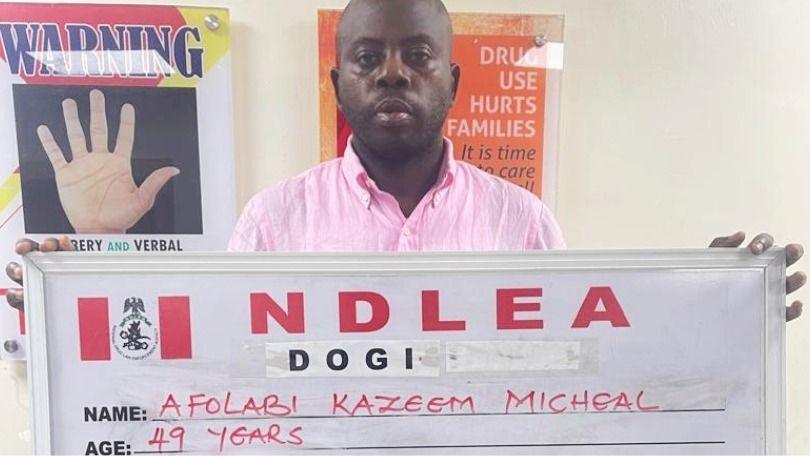
Businessman and social media influencer, Afolabi Michael Kazeem, popularly known as KC Luxury, has asked Justice Musa Kakaki of the Federal High Court in Lagos to withdraw from his trial over alleged cocaine trafficking and money laundering, citing alleged irregularities in court records and concerns about his health.
Kazeem is standing trial alongside two other defendants over the alleged trafficking of 184.5 kilogrammes of cocaine and money laundering.
The application for the judge’s recusal followed the court’s refusal on October 28, 2026, to grant Kazeem bail on medical grounds. In its ruling, the court held that the defence had failed to establish special circumstances or provide sufficient evidence to justify his release.
At the resumed hearing on Monday, Kazeem was absent from court. His counsel, Chief Emefo Etudo, who appeared alongside Mrs Charity Etudo, informed the court of the application seeking Justice Kakaki’s recusal.
Etudo alleged that the court’s record of proceedings did not reflect the ruling delivered on October 28 on his client’s bail application. He said repeated efforts to obtain a copy of the ruling from the court registry had not been successful.
According to the lawyer, the defence was informed that the judge had yet to sign the ruling, a situation he said could affect his client’s ability to exercise his right of appeal within the prescribed period.
The defence counsel also raised concerns over a reply affidavit allegedly filed in the case but which he claimed had gone missing from the court records.
He questioned the safety of documents submitted by the defence, saying the alleged disappearance of the affidavit had further weakened his client’s confidence in the proceedings.
“The record of proceedings did not reflect that any ruling was made on October 28, 2026, by this honourable court. And we don’t feel so safe that our evidence, like the reply affidavit that got missing, is safe in the court,” Etudo told the court.
The lawyer also criticised what he described as inadequate recording facilities at the Federal High Court, arguing that the use of verbatim recording equipment would help ensure that statements and decisions made during proceedings were accurately documented.
Etudo further challenged the prosecution’s evidence, insisting that the documents presented before the court did not establish a sufficient connection between the first, second and third defendants and the alleged offences.
He said the defence intended to file a separate application challenging the sufficiency of the prosecution’s evidence but wanted the court to first determine the application for recusal.
However, prosecution counsel, Ibrahim Abu, opposed the immediate consideration of the application, arguing that the matter was scheduled for trial and that the defence had failed to explain Kazeem’s absence.
Abu said the prosecution had six witnesses in court and was ready to begin the trial in line with the court’s earlier directive.
He also told the court that the defence served him with the recusal application during the stand-down and requested five days to respond, rather than the seven days ordinarily allowed under the rules.
The prosecution described allegations of judicial bias as serious and maintained that the court had treated all parties fairly.
Abu argued that the refusal of bail could not, on its own, be interpreted as evidence of bias, particularly as the trial had not commenced.
He maintained that the defence had the option of appealing the bail decision or filing another bail application if it believed there were grounds to do so.
“Refusal of bail is the discretion of the court. That is not bias. There is an opportunity to appeal the decision, which has not been taken,” he said.
The prosecution also opposed the suggestion that the charges should be separated, arguing that the first count involved an alleged conspiracy among the defendants.
Counsel to the second defendant, Augustine Audu, SAN, confirmed that he was served with the recusal application during the court’s stand-down. He urged the court to hear and determine the application before proceeding with the trial.
Audu said the pending application had stalled the proceedings and was affecting the court’s earlier directive for an accelerated hearing.
He also called on the prosecution to consider amending the charge and separating the defendants so that the second and third defendants could proceed with their trial without being held back by the first defendant’s situation.
“We do not want the fate of the second and third defendants to be tied to the first defendant, because we are stuck,” he said.
The senior advocate argued that the conspiracy charge did not prevent the prosecution from proceeding against some defendants while others were unavailable.
“The fate of the second and third defendants cannot be left hanging. The first count is conspiracy, and people can be tried while others are at large,” he argued.
Audu also urged the court to consider bail for the second and third defendants, maintaining that they should not remain in custody while the dispute involving the first defendant continued.
He said his client was willing to face trial and clear his name, adding that the second defendant should not suffer the consequences of proceedings involving another defendant.
Audu stated that he would not oppose the recusal application, describing it as a matter between the first defendant and the prosecution. He also expressed concern that his client remained in custody despite the presumption of innocence.
In response, Etudo said he had reluctantly filed the application because his client had lost confidence in the court.
“My client has lost confidence in this court, and that is why I have had to bring this application, although I was reluctant to do so,” he said.
The defence counsel also raised fresh concerns about Kazeem’s health, claiming that his condition had deteriorated while in custody. He challenged the prosecution to verify his client’s medical condition.
Etudo referred to an earlier case at the Ikeja High Court in which he had sought the release of a client suffering from prostate cancer to enable him to receive medical treatment.
According to him, the court refused the application, and the defendant died before the next adjourned date. He said the experience informed his concern about Kazeem’s condition and the possible consequences of keeping him in custody without adequate medical attention.
The lawyer maintained that his client was in a serious condition and no longer had confidence in the court handling the trial.
The prosecution, however, maintained its readiness to proceed with the case and requested five days to respond to the recusal application.
Justice Kakaki subsequently adjourned the matter until November 25, 2026, for the hearing of submissions on the application.
The court is expected to determine the request for recusal before the trial can proceed further.
 Dethroned Osun Monarch Sues Adeleke Over Replacement Plan
 FG Tightens Payroll Checks as Salary Bill Hits N1.96tn
 NAFDAC Intensifies Crackdown on Banned Alcohol
 Imo West Senate Ticket Dispute Deepens After Court Ruling
 Seven-Year Jail Term Exposes Dark Side of Football Rivalry in Argentina
 KC Luxury Seeks Justice Kakaki’s Recusal Over Court Record Allegations