
CNG Fare Cuts Stall as Nigerians Continue to Face High Transport Costs
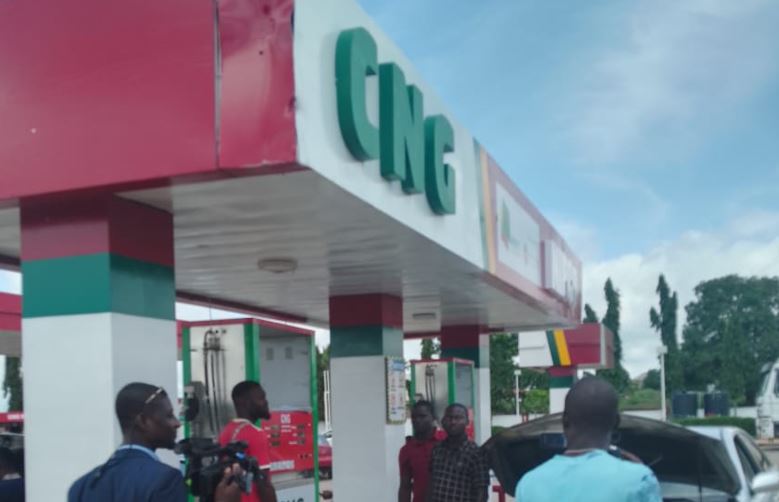
The Federal Government’s plan to use Compressed Natural Gas-powered buses to reduce transportation costs has met uneven implementation across several states, leaving many commuters paying the same fares despite the October 1 target for cheaper transport.
President Bola Tinubu had directed state governments to ensure that savings from cheaper CNG-powered transportation were passed directly to commuters through reduced fares.
The directive followed an August 27 meeting between the President and the 36 state governors, where the National Affordable CNG Transit Programme was discussed as part of efforts to cushion the effect of high transportation costs.
Tinubu subsequently said more Nigerians should begin to experience measurable reductions in transport fares from October 1. He urged states to work with transport unions and commercial operators, support vehicle conversions and fleet deployment, and provide the infrastructure needed for the programme.
However, checks across several states indicate that the impact has remained limited, with transport fares largely unchanged in a number of locations.
States including Enugu, Anambra, Delta, Imo, Sokoto, Kebbi, Jigawa, Gombe, Edo, Plateau, Ondo, Osun, Oyo and Ogun were among those where commuters continued to pay existing fares as the October 1 target took effect.
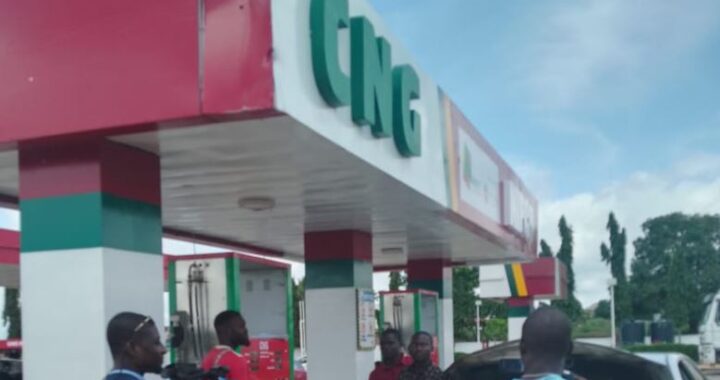
The uneven rollout has been linked partly to limited access to CNG buses and infrastructure. In some locations, transport operators have complained about shortages of refuelling stations and conversion centres, while others are still waiting for government-supported vehicles to be deployed.
For many commercial transport operators, the transition also involves the cost and logistics of converting vehicles from petrol or diesel to CNG, making the availability of conversion facilities an important part of the government’s plan.
The Presidential Initiative on CNG and Electric Vehicles, however, says the programme has already produced fare reductions in some parts of the country.
Its chairman, Ismaeel Ahmed, said states including Borno, Kaduna, Zamfara and Ebonyi had started reducing fares through the deployment of CNG and electric vehicles.
Ahmed also clarified that October 1 was not intended as a deadline requiring every state to introduce a fare reduction on the same day. Rather, he said, it marked the point from which the Federal Government would begin monitoring the nationwide rollout.
There are already examples of significant fare reductions where alternative-energy buses have been deployed.
In Borno, CNG-powered and electric public transport services have reportedly carried passengers for between N50 and N100 on routes where commercial operators charge between N300 and N600.
Kaduna has also deployed 100 CNG buses providing free transportation on major routes. The state said the buses carried about 3.2 million passengers during their first year and saved commuters more than N3.5bn in transportation expenses.
In Oyo, the introduction of CNG buses by Pacesetter Transport reportedly reduced the Lagos-Ibadan fare from about N8,000 to N3,200 during the initial deployment.
Other examples include Adamawa, where alternative-energy transport has reportedly reduced fares by as much as 50 per cent, and Enugu, where 100 CNG buses reduced the Enugu-Nsukka fare from N2,500 to N1,500.
Plateau has also introduced government-supported buses carrying commuters at N200 on some routes, compared with fares above N500 charged by commercial operators.
In the Federal Capital Territory, CNG-converted commercial vehicles operating on some Abuja routes have reportedly recorded fare reductions of about 40 per cent.
The Federal Government has said the wider CNG programme is intended to reduce Nigeria’s dependence on petrol and diesel while taking advantage of the country’s large natural gas resources.
Tinubu said more than 120,000 vehicles had already been converted to CNG and that the country had more than 400 certified conversion centres and over 90 CNG refuelling stations, with further expansion underway.
The Presidential Initiative on CNG and Electric Vehicles has also reported the deployment of CNG buses, tricycles and electric buses, alongside the expansion of conversion facilities and technician training.
Despite these developments, the experience of commuters across the country remains mixed. While passengers in some states are already benefiting from subsidised or CNG-powered transport, others are yet to see any noticeable reduction in the cost of getting to work, school, markets and other destinations.
The situation has therefore shifted attention from the announcement of the CNG policy to the question of how quickly states can turn the available infrastructure and vehicles into affordable daily transportation for ordinary Nigerians.
With transport costs directly affecting the prices of food and other essential goods, the effectiveness of the CNG programme will ultimately depend on whether cheaper energy is consistently translated into cheaper fares across more routes and states.
 Workers Begin Three-Day Warning Strike Over Rising Hardship
  Wike Vows to Resign if Tinubu Loses FCT, Rivers in 2027
  Editorial: President Bola Ahmed Tinubu — 2026 Independence Day Address
  Dangote Says Ready To Face Legal Battles Over Fuel Imports
  Ogun 2027: Rotham Drops Yayi Suit, Puts Ogun West Agenda Ahead of Legal Battle
  Olu Jacobs Laid to Rest as Nollywood Bids Farewell to Screen Icon
  Sir Alex Ferguson Reflects on Life After Brain Haemorrhage
  CNG Fare Cuts Stall as Nigerians Continue to Face High Transport Costs