
Tinubu Declares New Era of Prosperity as Nigeria Marks 66th Independence Anniversary
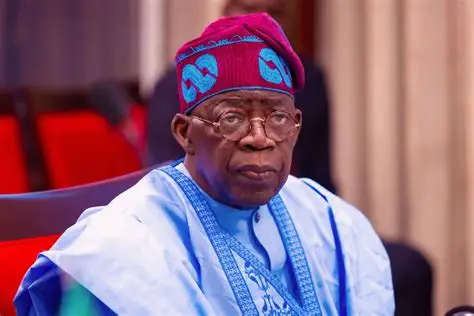
President Bola Ahmed Tinubu has declared that Nigeria has entered a new phase of economic development, saying the country is moving from the difficult period of reforms into what he described as an “age of prosperity.”
Tinubu made the declaration on Thursday in his Independence Day address to Nigerians as the country marked 66 years of independence. The address, titled “From Reform to Prosperity,” focused largely on the economic measures introduced by his administration since 2023 and the next phase of his government’s agenda.
The President said Nigeria’s journey since independence had been marked by periods of hope and disappointment, including civil war, military rule, economic crises, insecurity and political instability. Despite these challenges, he said Nigerians had continued to demonstrate resilience and maintain faith in the country’s future.
Tinubu said the promise of independence went beyond the raising of the national flag, arguing that the country’s founding generation expected Nigerians to have the freedom to shape their destiny and build a nation capable of providing opportunity, dignity and a better standard of living.
He said his administration inherited an economy that required difficult decisions and argued that successive governments had for years postponed some of the measures needed to address longstanding economic problems.
Using the example of a patient diagnosed with cancer, Tinubu compared Nigeria’s economic situation before his administration’s reforms to a serious illness that required difficult treatment. He said previous governments had often chosen measures that temporarily reduced the pain without addressing what he described as the underlying problems.
The President said his administration instead chose to confront those challenges through reforms, including the removal of the petrol subsidy and changes to the foreign exchange system.
He acknowledged that the reforms had produced significant hardship for Nigerians, but argued that the difficulties were part of the adjustment required to correct what he described as longstanding distortions in the economy.
According to Tinubu, three and a half years into his administration, the government was beginning to see what he described as improvements in the economic outlook.
He cited economic growth of more than four per cent, contributions from both the oil and non-oil sectors, a reduction in oil theft, lower inflation from its previous peak, stronger foreign reserves and increased stability in the foreign exchange market.
The President also said Nigeria recorded its highest-ever non-oil export revenue in 2025, exceeding $6 billion. He presented the development as evidence of increased activity by Nigerian businesses outside the oil sector.
The government has continued to highlight economic growth as one of the indicators of the reforms. The Secretary to the Government of the Federation, George Akume, separately said Nigeria recorded 4.2 per cent real GDP growth in the first half of 2026, compared with 3.9 per cent during the corresponding period of 2025.
Tinubu also said international observers, multilateral institutions and private investors had taken note of changes in the Nigerian economy, while foreign direct investment had continued to increase.
However, the President acknowledged that economic statistics alone would not amount to prosperity if ordinary Nigerians did not experience improvements in their daily lives.
He said the next phase of his administration would therefore focus on lowering the cost of living, creating jobs, expanding production and ensuring that economic growth translates into better opportunities for households.
Tinubu said his definition of prosperity included a situation where farmers could cultivate their land safely, produce more at lower costs and earn better returns from their work.
He also said factories should have more reliable power, businesses should have access to credit and young Nigerians should be able to find productive employment without being forced to leave the country in search of opportunities.
Food production featured prominently in the President’s new agenda. He said the government would expand mechanised irrigation and dry-season farming while improving access to seeds, fertiliser and agricultural machinery.
He also highlighted investment in storage and transportation, saying the government was working to improve roads, railways and ports that connect farms and factories to markets.
Tinubu argued that reducing the cost of production and transportation would eventually help lower the prices paid by consumers.
He explained that when farmers produce at lower costs, fewer agricultural products are lost between farms and markets, manufacturers spend less on power and transportation becomes more efficient, businesses would be better positioned to offer goods at more affordable prices.
The President also placed industrialisation at the centre of the next stage of his economic programme.
He said Nigeria would use its gas resources to support new industries and assist businesses seeking to revive factories in the country’s industrial centres.
Tinubu also promised greater support for digital connectivity, saying more communities would be connected to the modern economy while young Nigerians would receive training in skills demanded by employers.
He said he wanted to see more Nigerians producing goods locally, more Nigerian farms supplying cities and factories, and more Nigerian companies selling their products to international markets.
The President further spoke about the country’s young population, describing Nigeria’s youthful demographic as a potential economic advantage if properly supported with education, skills, employment and entrepreneurship opportunities.
He said millions of young Nigerians enter adulthood every year with talent and ambition, adding that government policies must ensure that the population becomes an engine of production rather than a source of frustration.
Tinubu said his administration would therefore continue to place jobs, enterprise development and industrial growth at the centre of its economic policies.
The President also acknowledged that millions of Nigerians remain under pressure from the cost of food, education, healthcare and transportation.
He argued that the difficulties faced by vulnerable households did not begin with the reforms introduced since 2023, but were the result of problems that had accumulated over several decades, including low productivity, inadequate infrastructure and limited economic opportunities.
He said his administration had continued to provide support for vulnerable citizens while pursuing broader economic reforms.
Tinubu stated that salaries and pensions had been paid on time and in full since 2023, while changes had also been made to the national pension system.
He also highlighted government social programmes and initiatives aimed at supporting poorer households, education and access to essential services.
The President said the government’s social interventions should not be regarded as a permanent substitute for economic prosperity, but as a bridge for citizens while the wider economy is strengthened.
He maintained that the ultimate objective should be to reduce poverty by expanding productive opportunities rather than simply managing the effects of poverty.
Tinubu acknowledged that achieving that objective would take time and require sustained economic growth and the creation of millions of productive jobs across the country.
He said Nigeria was now approaching the next phase of its development from what he described as a stronger economic position after the difficult reforms of the past three years.
The President also warned against attempts to reverse the reforms, particularly the removal of the petrol subsidy.
In a separate portion of the Independence Day address, Tinubu described calls to return to the old subsidy arrangement as a “siren song” and urged Nigerians to remember the reasons his administration introduced the reforms.
He said reversing the policies would amount to abandoning the difficult decisions already taken to address structural problems in the economy.
Tinubu’s position places the continuation of the reforms at the centre of the government’s economic strategy, even as Nigerians continue to face concerns over living costs and household purchasing power.
The President said the next challenge was to ensure that the economic improvements being recorded were translated into tangible benefits for citizens.
He said prosperity should be measured not only by GDP figures, foreign reserves or other economic indicators, but by whether farmers, workers, entrepreneurs, students and families experience better opportunities.
The President also linked the country’s economic future to improved infrastructure, industrial production, access to finance, reliable energy and stronger domestic manufacturing.
He said Nigeria had the land, population and natural resources required to become a major productive economy, but that those advantages needed to be supported by consistent policies and investment.
Tinubu ended his address by calling on Nigerians to maintain confidence in the country and continue working together despite the difficulties that remain.
He said the country had passed through what he described as its own “Red Sea” and that Nigerians should now focus on moving forward rather than returning to the policies of the past.
The President declared that the “age of reform” had done its work and that the next phase was the “age of prosperity,” with the stated goal of making the promise of Nigeria’s independence more visible in the everyday lives of its citizens.
He said the road ahead would still require discipline, patience and sustained effort, but maintained that Nigeria now had a clearer economic direction and stronger foundation on which to build.
As Nigeria marked its 66th Independence Anniversary, Tinubu therefore presented the next phase of his administration as one focused on jobs, production, lower living costs, industrial expansion and broader economic opportunities.
The central message of the address was that the difficult economic adjustments of the past three years were intended to prepare the country for a period in which growth would increasingly be reflected in the lives and livelihoods of ordinary Nigerians.
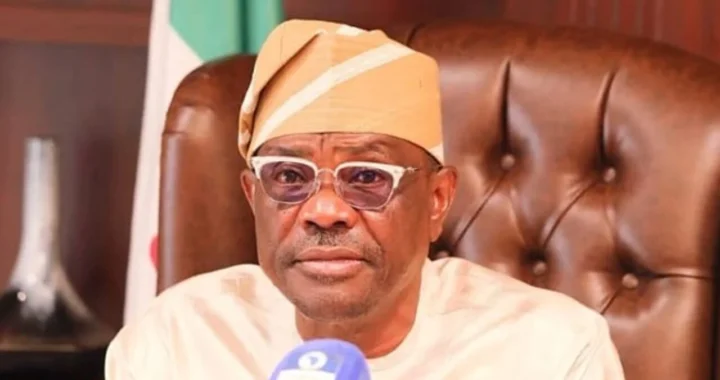 Wike Vows to Resign if Tinubu Loses FCT, Rivers in 2027
  Editorial: President Bola Ahmed Tinubu — 2026 Independence Day Address
  Dangote Says Ready To Face Legal Battles Over Fuel Imports
  Airlines Face Fresh Disruptions As Jet A1 Costs Soar
  US Man Walks Free After 41 Years On Death Row
  Cjay Nwokafor Dies Hours Before Movie Release as Nollywood Mourns Rising Actor