
Obi Insists He Left Anambra Debt-Free Amid Fresh Dispute
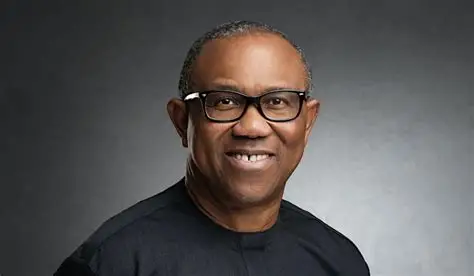
Peter Obi has again defended his financial record as governor of Anambra State, insisting that he left office in March 2014 without unpaid salaries, pensions, gratuities or certified contractor obligations and did not borrow from financial institutions or issue bonds on behalf of the state.
Obi, the presidential candidate of the Nigeria Democratic Congress for the 2027 election, made the clarification during an appearance on Arise Television’s Prime Time on Thursday, as the dispute over Anambra’s finances during his eight-year administration continued.
The former governor said he never approached a commercial bank or other financial institution to obtain loans for Anambra during his tenure. He maintained that when he handed over on March 17, 2014, his administration had settled obligations that were due to workers and contractors whose jobs had been completed, certified and verified.
His comments followed allegations by the Anambra State Government that loans connected to projects initiated during his administration remain outstanding and are still being serviced years after he left office.
The state government, through Commissioner for Information and Value Reorientation Law Mefor, recently said eight external borrowings associated with Obi’s tenure had an outstanding balance equivalent to about ₦127.4bn as of June 30, 2026. The government said the original facilities amounted to about $123.77m and were connected to projects covering education, healthcare, erosion control, malaria and agriculture.
Obi, however, drew a distinction between borrowing directly from financial institutions and concessionary multilateral financing made available through the Federal Government for development programmes.
He cited the State Education Programme Investment Project as an example, explaining that Anambra, Ekiti and Bauchi were selected for concessionary multilateral support because of their performance in education.
According to Obi, the World Bank-supported arrangement should not be presented as though his government approached a commercial bank and independently borrowed the money. He further argued that some drawdowns under the programme occurred after he had left office.
The former governor also challenged the accounting basis for attributing the entire value of an approved loan facility to an administration when the full amount had not been drawn down.
He argued that if a government secured approval for a ₦10bn facility but accessed only ₦500m, it would be inaccurate to describe the entire ₦10bn as money already borrowed and owed by that administration.
Obi maintained that even if the disputed facilities were counted against his administration, Anambra was left with enough financial resources to meet its obligations and remain in a strong financial position.
To strengthen his argument that he avoided conventional borrowing, Obi referred to former Director-General of the Debt Management Office Abraham Nwankwo. He said Nwankwo once publicly remarked that Obi was the only governor during his period at the DMO who never approached the agency seeking approval to borrow.
But the Anambra government has presented a different account.
Mefor said records released by the government showed eight external loans contracted between 2007 and 2013, with an outstanding balance of about $92.35m as of June 2026. The government maintains that the facilities remain obligations of Anambra irrespective of how they were structured or when subsequent drawdowns occurred.
The state government has also disputed Obi’s assertion that he left no salary, pension or gratuity liabilities. It cited arrears involving workers of the defunct Anambra State Water Corporation and inherited obligations involving teachers and local government employees.
Obi has rejected those claims, maintaining that his administration cleared more than ₦35bn in historical gratuities and arrears and that no salaries, pensions, gratuities or payments to contractors with completed and certified projects were outstanding when he handed over.
The disagreement has consequently moved beyond a debate over whether Anambra had liabilities to a more technical argument about when a government should be considered responsible for multilateral facilities approved during its tenure but drawn down or repaid over several administrations.
It has also acquired a political dimension ahead of the 2027 presidential election, with Obi’s record as Anambra governor remaining central to the economic and governance credentials he presents nationally.
For Obi, the position remains unchanged: he says his administration did not go to financial institutions to borrow, did not issue bonds and did not hand over unpaid certified obligations.
For the Anambra State Government, the existence of external facilities approved during Obi’s years in office and still appearing in the state’s debt records means the claim of leaving Anambra entirely debt-free does not tell the whole story.
The competing claims now leave the argument resting substantially on the classification, drawdown dates and repayment history of the individual facilities — records that will determine whether the disputed obligations are properly attributable to Obi’s administration, later governments, or a combination of both.
 Tinubu Takes Africa’s UN Seat Demand to Global Stage
  NDLEA Busts Nigerian-Mexican Meth Lab in Enugu
  Trump Rolls Out Red Carpet for Xi at White House
  Milei Slams UN Over Falklands Dispute
  Bauchi Police Arrest Six Over Drugs, Murder Cases
  Otti Rules Out Presidency, Says He’ll Quit Politics After Governorship