
Tinubu Takes Africa’s UN Seat Demand to Global Stage
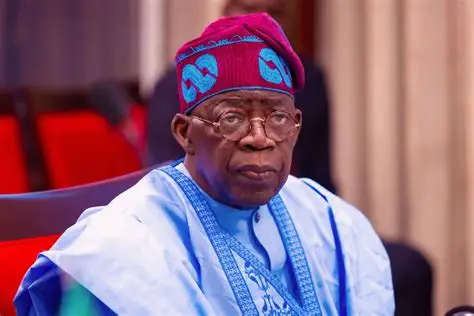
President Bola Tinubu has renewed Africa’s long-running demand for a fundamental restructuring of the United Nations Security Council, insisting that a continent of 54 countries should no longer remain without a permanent voice in the UN’s most powerful decision-making body.
Addressing world leaders at the 81st Session of the United Nations General Assembly in New York on Thursday, September 24, 2026, Tinubu demanded at least two permanent Security Council seats for Africa, complete with veto powers for as long as the veto remains part of the UN system. He also called for Africa to hold five non-permanent seats on an expanded council.
The Nigerian President did not personally deliver the address. Vice President Kashim Shettima presented the national statement on his behalf before delegates gathered for the General Debate.
At the heart of Nigeria’s argument was a simple question about representation: how can the Security Council continue to make consequential decisions on African conflicts and security while no African country has permanent membership?
Tinubu argued that the international system created at the end of the Second World War no longer adequately reflects the political, demographic and economic realities of the modern world. He said the global order of 2026 should not remain tied to the distribution of power established in 1945.
Currently, the Security Council has 15 members. Five — the United States, United Kingdom, France, China and Russia — are permanent members with veto powers, while the remaining 10 seats rotate among UN member states for two-year terms.
Africa, despite accounting for 54 of the UN’s 193 member states, has no permanent seat.
That imbalance has been at the centre of Africa’s campaign for Security Council reform for more than two decades.
Tinubu anchored Nigeria’s demand on the Ezulwini Consensus and the Sirte Declaration, which form the basis of the African Union’s common position on Security Council reform. Under that position, Africa seeks at least two permanent seats with the same privileges as existing permanent members, including veto power while the veto exists, as well as five non-permanent seats.
Nigeria also used the UN platform to signal that it considers itself capable of taking on greater international responsibilities.
Tinubu pointed to Nigeria’s decades of participation in peace and security operations across Africa, including interventions and peacekeeping efforts in Liberia, Sierra Leone, Darfur, Mali and The Gambia.
He also cited Nigeria’s involvement through the Economic Community of West African States, the African Union and partnerships in the Gulf of Guinea, covering mediation, democratic governance, counter-terrorism and maritime security.
The message was significant because the argument over Africa’s representation is no longer confined to African governments.
Just two days before Nigeria delivered its address, the G4 countries — Brazil, Germany, India and Japan — publicly backed stronger African representation on the Security Council, including permanent membership.
Meeting on the sidelines of the General Assembly in New York, foreign ministers from the four countries argued that the Security Council’s current composition no longer reflects contemporary geopolitical realities and called for movement towards substantive negotiations on reform.
The African Union has maintained a similar position. AU Commission Chairperson Mahmoud Ali Youssouf said earlier this year that permanent African representation should be viewed as correcting what the continental body considers a historical imbalance rather than as a concession to Africa.
But support for reform and actually changing the Security Council are two different things.
Any fundamental restructuring would require amendments to the UN Charter. Such amendments need approval by two-thirds of the General Assembly and ratification by two-thirds of UN member states, including all five existing permanent members of the Security Council.
That requirement has helped make Security Council reform one of the most difficult institutional questions confronting the United Nations.
For Nigeria, however, the argument goes beyond adding more chairs around a table.
Tinubu’s address presented the issue as a test of the legitimacy of the international system itself: whether institutions established eight decades ago can continue claiming to represent the world while entire regions remain outside their most powerful decision-making structures.
The President also connected the demand for UN reform with wider challenges facing developing countries, including climate change, artificial intelligence, economic development and international security.
On climate change, Nigeria argued that developing countries should not be forced to choose between industrialisation and environmental responsibility. Tinubu maintained that poorer countries need technology, financing and sufficient policy space to expand energy access while moving towards lower-carbon development.
Nigeria reaffirmed its commitment to achieving net-zero emissions by 2060 under its Energy Transition Plan while continuing to regard gas as a transitional fuel alongside renewable energy, clean cooking, climate-smart agriculture and other measures.
Tinubu also addressed the global debate surrounding artificial intelligence, arguing that emerging technology should not be approached primarily through fear. Nigeria’s position was that AI could either deepen global problems or improve healthcare, education, agriculture, governance and productivity, depending on how countries choose to develop and regulate it.
But it was the Security Council demand that carried the strongest institutional message from Nigeria’s appearance in New York.
Africa has spent decades participating in UN peacekeeping operations, absorbing the consequences of conflicts discussed by the Security Council and contributing troops, diplomatic resources and political capital to international security efforts.
Yet when the five permanent members exercise the veto — the most consequential power available within the UN system — Africa has no permanent representative at the table.
Tinubu’s proposal seeks to change that equation.
Whether the latest push produces structural reform remains uncertain. Previous attempts to enlarge the Security Council have repeatedly stalled because UN members disagree over the number of additional seats, which countries should occupy them and whether new permanent members should receive veto powers.
What has changed is the intensity of the argument.
With African governments maintaining a common position and countries outside the continent increasingly acknowledging the case for broader representation, the debate is becoming less about whether the Security Council reflects today’s world and more about whether UN members can agree on how to redesign it.
For Nigeria, the position delivered in New York was therefore larger than a request for additional representation.
It was a challenge to an international order built in the aftermath of 1945: if the United Nations intends to speak for the world of 2026 and beyond, Nigeria argues that Africa must have a permanent place — and meaningful power — at the table.
 Anambra Debt: Obi Says He Has No Quarrel With Soludo
  NDLEA Busts Nigerian-Mexican Meth Lab in Enugu
  Trump Rolls Out Red Carpet for Xi at White House
  Milei Slams UN Over Falklands Dispute
  Bauchi Police Arrest Six Over Drugs, Murder Cases
  Otti Rules Out Presidency, Says He’ll Quit Politics After Governorship