
CJN Unveils Major Digital Court Reforms, Says AI Can Support But Never Replace Human Judges
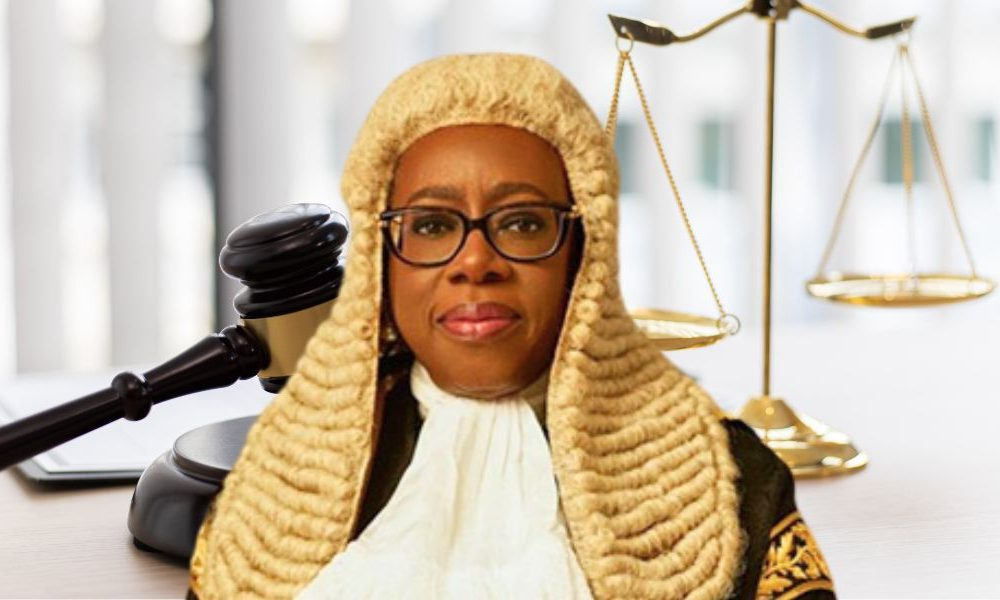
Chief Justice of Nigeria, Kudirat Kekere-Ekun, has announced sweeping digital reforms for Nigeria’s judiciary while declaring that artificial intelligence can never take over the constitutional role of human judges no matter how advanced technology becomes.
The Chief Justice made the declaration on Monday while delivering a keynote address at the Nigerian Bar Association Lagos Branch Law Week 2026 held at Jewel AIEDA Event Centre, where she addressed the growing impact of technology on legal practice and the future of justice administration in Nigeria.
Speaking on the theme “Beyond Disruption: Redefining Legal Practice at the Intersection of Law, Technology and Justice,” Justice Kekere-Ekun said Nigeria’s legal profession has entered a new era where digital innovation is already changing how lawyers and courts operate, making it necessary for the profession to adapt while protecting the core values of justice.
According to her, the conversation is no longer about whether technology will disrupt legal practice because that transformation is already happening globally through artificial intelligence tools used for legal research, contract drafting, document review, electronic filing systems, digital case management and even virtual court proceedings.
Despite these advances, the Chief Justice stressed that justice remains fundamentally a human responsibility which cannot be surrendered to machines or automated systems.
She explained that while artificial intelligence can analyze legal data, identify patterns from previous judgments and even predict possible outcomes based on precedent, such systems cannot interpret constitutional values, weigh competing rights or determine what fairness and justice demand in complex individual cases.
Justice Kekere-Ekun warned legal practitioners against blindly trusting AI-generated legal materials, citing recent international incidents where lawyers faced sanctions after relying on court authorities and legal precedents completely fabricated by artificial intelligence systems, a growing problem now widely referred to as AI hallucination.
She said such incidents prove that technological errors can easily become professional misconduct if lawyers fail to independently verify legal authorities before presenting them in court.
According to the Chief Justice, ethical responsibility remains entirely with lawyers regardless of how sophisticated legal technology becomes, adding that no machine can replace professional judgment and accountability required in legal practice.
She also raised concerns over hidden bias within artificial intelligence systems, explaining that algorithms are trained using human-created data and can unintentionally reproduce historical prejudice while appearing objective.
Because of this risk, she said Nigeria’s legal system must urgently develop clear rules governing algorithmic evidence, transparency standards and accountability mechanisms as artificial intelligence becomes increasingly involved in commercial transactions, financial services and future litigation.
Addressing members of the legal profession, Justice Kekere-Ekun urged lawyers to acquire new knowledge beyond traditional legal training by understanding emerging technologies such as artificial intelligence, blockchain technology, cybersecurity systems, digital evidence handling and online financial technologies.
She noted that the future legal profession will increasingly reward lawyers who successfully combine strong legal expertise with technological competence.
The Chief Justice said judges themselves must also embrace digital literacy because modern courts are already beginning to confront disputes involving cybercrime, digital assets, blockchain transactions, synthetic media, deepfake evidence and technologically complex financial crimes.
According to her, every major technological innovation eventually finds its way before the courts, making continuous judicial education essential for effective justice delivery.
One of the biggest announcements made during the event was confirmation that Nigeria’s Supreme Court of Nigeria is finalizing implementation of the National Case Management System (NCMS), described as one of the biggest institutional reforms ever introduced at the country’s highest court.
She explained that the digital platform will allow electronic monitoring of cases from filing stage to final judgment while improving case tracking, registry management, scheduling systems, data security and transparency within court administration.
Justice Kekere-Ekun also revealed that the Supreme Court will soon introduce new practice directions titled “Supreme Court Mandatory Upload of Electronic Copies of Processes, Record of Appeal and Other Matters Practice Directions 2026.”
Under the new policy, lawyers handling cases before the Supreme Court will now be required to upload electronic copies of legal processes and appeal records alongside normal filing procedures.
According to her, the initiative will significantly reduce delays caused by physical documentation, improve access to case files for justices and speed up hearing and determination of appeals before the apex court.
The Chief Justice stressed that these reforms go beyond technological upgrades and represent a deliberate effort to strengthen confidence in the judiciary while making justice delivery faster, more transparent and more efficient for ordinary Nigerians.
However, she warned that Nigeria’s digital transformation must not create new barriers for citizens living in areas with limited internet access or poor digital literacy, insisting that technology should expand access to justice rather than exclude vulnerable citizens.
Expressing confidence in the country’s potential, Justice Kekere-Ekun said Nigeria currently has the largest legal profession in Africa, one of the busiest judicial systems on the continent and a rapidly growing technology ecosystem capable of supporting Africa’s most advanced digital justice system.
She challenged the Nigerian Bar Association, universities and the Council of Legal Education to begin integrating technological competence into legal training so future lawyers are better prepared for the realities of modern practice.
The Chief Justice also urged Nigerian technology innovators to stop depending solely on imported software by developing digital tools specifically designed around Nigeria’s constitutional framework, judicial procedures and local legal realities.
Speaking directly to young lawyers entering the profession, she described the present era as one filled with enormous opportunity but warned them never to allow technology replace critical thinking, ethical judgment and intellectual discipline.
According to her, artificial intelligence may generate answers at remarkable speed, but it lacks the human ability to ask difficult legal questions, exercise conscience and apply moral reasoning — qualities she said define truly exceptional lawyers and judges.
Concluding her address, Justice Kekere-Ekun said technology must always remain an instrument used to improve justice rather than becoming the purpose of justice itself.
She maintained that public confidence in the judiciary ultimately depends not on digital sophistication or artificial intelligence systems, but on the integrity of judges, the professionalism of lawyers and the independence of judicial institutions.
In her final words, the Chief Justice made her position unmistakably clear: No algorithm, no matter how powerful, can ever replace the human conscience, constitutional responsibility and moral judgment required to deliver true justice.
 Tinubu Mourns Peter Onwubuariri, Presidential Media Aide Dies At 48
  Peter Obi’s Convoy Blocked In Benue As Sowore Condemns Incident
  Former Katsina Senator Bello Mandiya Dies At 62
  UNIZIK Lecturers Begin Indefinite Strike Over Unpaid August Salary
  Nomy Evicted From BBNaija Season 11 After Defying Big Brother’s Orders
  2027: Governorship Campaigns Begin As Candidates Unveil Fresh Promises
  New York Student Sentenced To One Year In Dubai Prison Over Airport Incident