
Senate Backs Down on Controversial Rule After Explosive Akpabio-Oshiomhole Faceoff
By Ranti Thomas
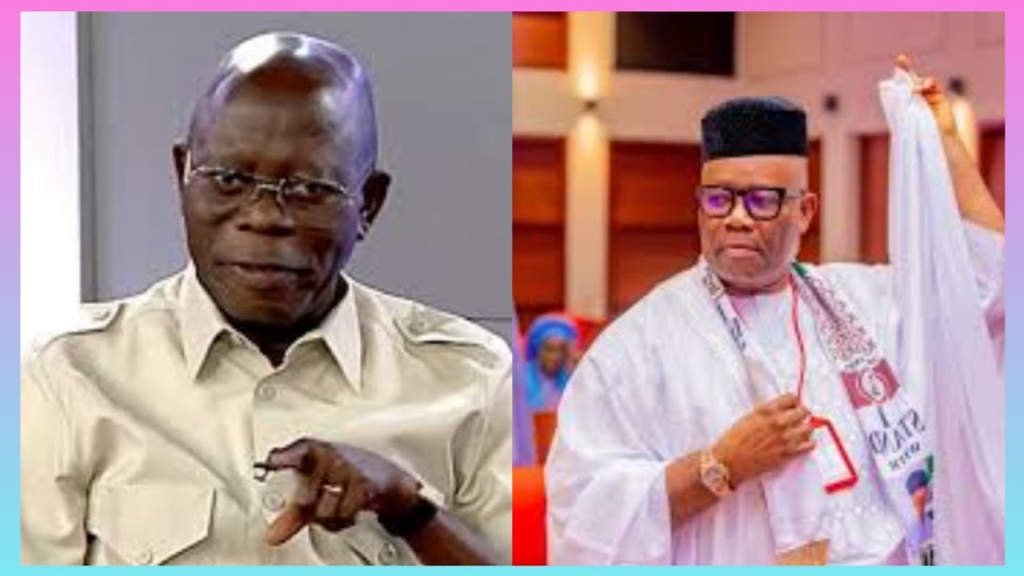
Tension inside Nigeria’s Senate forced a dramatic policy reversal after lawmakers moved to cancel part of a controversial amendment that had already triggered open confrontation between Senate President Godswill Akpabio and Senator Adams Oshiomhole.
The disputed amendment had introduced stricter conditions for senators seeking top leadership positions, including a requirement for consecutive years of service before contesting principal offices.
The decision immediately sparked backlash within the chamber, with Oshiomhole emerging as one of the strongest critics of the new rule.
The Edo lawmaker openly challenged the amendment, arguing that it unfairly narrowed the field and raised serious questions about fairness and internal democracy in the Senate.
The disagreement later escalated into a heated exchange during plenary, drawing national attention and exposing growing divisions among senators over future leadership succession.
Following mounting criticism, the Senate eventually reversed part of the amendment, explaining that some provisions needed to be reconsidered due to possible constitutional concerns.
Senate Leader Opeyemi Bamidele defended the reversal, saying parliament has the power to revisit earlier decisions whenever necessary to protect the integrity of legislative proceedings.
Despite the partial reversal, disagreements over eligibility for leadership positions remain unresolved, meaning the political tension inside the chamber is far from over.
Observers believe the controversy may be connected to early power calculations ahead of 2027, especially as discussions around future Senate leadership quietly intensify.
The clash has also fueled wider debate over whether internal parliamentary rules are being adjusted to favour certain political interests within the ruling party.
As lawmakers prepare for future legislative battles, many analysts believe the latest confrontation may only be the beginning of a larger struggle for control and influence inside the National Assembly.