
Court Clears Key Evidence Against Emefiele’s Co-Accused, Rejects Part of EFCC Statements
By Ranti Thomas
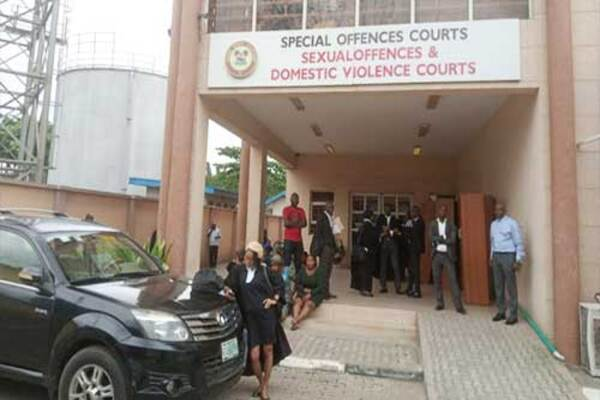
A key ruling has emerged from the ongoing corruption trial involving former Central Bank chief Godwin Emefiele, as the Lagos Special Offences Court has accepted part of the evidence against his co-defendant, Henry Omoile.
Sitting at the Ikeja division on Monday, Justice Rahman Oshodi held that statements made by Omoile to the Economic and Financial Crimes Commission on February 26, 2024, were legally obtained and can be used in court. The judge ruled that the prosecution established that the statements were given voluntarily.
However, the court drew a line on another set of statements recorded a day later. Justice Oshodi rejected the February 27, 2024 submissions, pointing out that they were neither taken in the presence of a lawyer nor supported by video evidence, making them inadmissible.
The decision followed a detailed trial-within-trial process that began late 2025, where the court examined claims by Omoile that his statements were forced. After reviewing testimonies and circumstances surrounding the interrogation, the judge concluded there was no proof of intimidation, threats, or coercion.
Omoile had earlier insisted through his counsel, Adeyinka Kotoye, that the anti-graft agency obtained the statements under pressure. But the court found otherwise, stating that the prosecution met the legal threshold required to prove voluntariness.
The case forms part of a broader prosecution involving alleged financial misconduct during Emefiele’s time as head of the apex bank. While Omoile faces a three-count charge linked to unlawful benefits received as an agent, Emefiele is defending himself against a 19-count charge bordering on alleged corrupt demands and gratification.
Both defendants have denied all allegations since their arraignment, setting the stage for a prolonged legal battle.
At the latest sitting, prosecuting counsel C.C. Okezie appeared for the commission, while Labi Lawal, SAN, represented both defendants.
With the evidentiary dispute partly settled, the court has now fixed June 26, June 30, and July 6 and 8, 2026, for the continuation of trial proceedings.