
Supreme Court Rejects Bid to Reopen Kudirat Abiola Case
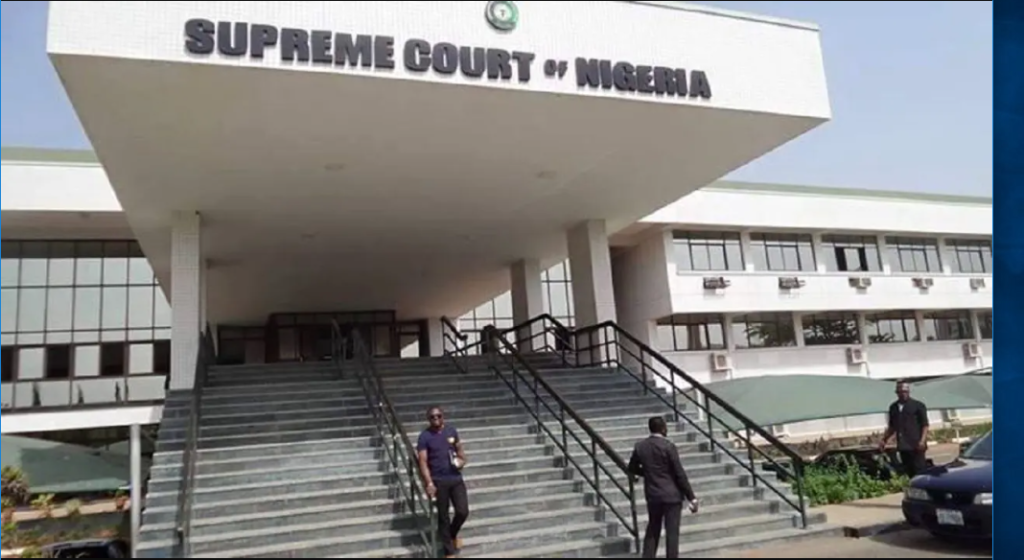
By Ranti Thomas
The Supreme Court has rejected Lagos State’s appeal seeking to reopen the 1996 murder trial of Major Hamza Al-Mustapha (rtd), a former Chief Security Officer to late military ruler General Sani Abacha, over the killing of politician Alhaja Kudirat Abiola.
Kudirat Abiola, wife of late businessman and politician Chief MKO Abiola, was assassinated on June 4, 1996, in Lagos State. She had been a prominent advocate for the reversal of her husband’s annulled June 12, 1993 presidential election, widely regarded as Nigeria’s freest and fairest poll.
Al-Mustapha was originally convicted by Justice Moji Dada of the Lagos State High Court on January 30, 2012, and sentenced to death alongside a co-defendant. The Court of Appeal, however, overturned the ruling in July 2013, acquitting them on the grounds that the evidence presented was insufficient to justify the death penalty.
In 2014, Lagos State approached the Supreme Court seeking to overturn the appellate court’s decision and reinstate the original conviction. The appeal was later paused but revived in 2017, when the apex court granted the state permission to extend the time for filing the necessary documents.
Despite the extension, the Supreme Court observed that Lagos State failed to take any meaningful action in over nine years, including filing a notice of appeal. Representing Al-Mustapha, Paul Daudu (SAN) informed the court that the state had not complied with the 2017 order and appeared to have abandoned the effort entirely.
A five-justice panel led by Justice Uwani Aba-Aji ruled that the appellant had effectively lost interest in pursuing the case. The court also expressed disapproval that Lagos State neither provided legal representation nor informed the court or the respondent despite repeated service of hearing notices since 2020.
As a result, the Supreme Court dismissed the appeals, including SC/CR/45/2014 and SC/CR/6/2014, affirming that the state’s prolonged inaction amounted to abandonment of the case.