
Tinubu Urges Focus on Jobs, Productivity as Economic Reforms Continue
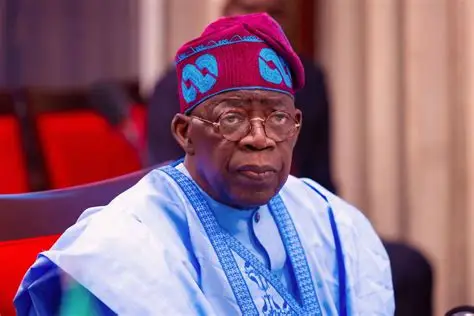
President Bola Tinubu has said Nigeria must turn its ongoing economic reforms into better jobs, higher productivity and improved living standards, stressing that the country’s economic recovery should bring real benefits to citizens.
Tinubu spoke on Monday, October 26, 2026, while declaring open the 32nd Nigerian Economic Summit Group (NESG) summit in Abuja. He was represented at the event by Vice President Kashim Shettima.
The summit, themed “Growth That Works: Delivering Jobs, Productivity and Shared Prosperity,” brought together government officials, business leaders and other stakeholders to discuss how Nigeria can achieve stronger and more inclusive economic growth.
The President said his administration was working to change Nigeria’s long-standing record of economic underperformance through reforms aimed at removing barriers to investment and making better use of the country’s human and natural resources.
He explained that the government had taken difficult decisions because there was no shortcut to economic growth. According to him, stabilising the economy was necessary to create an environment where businesses could invest, expand their operations and employ more Nigerians.
Tinubu said the country’s large population could become a major economic advantage if the right conditions were created for productive activities. He added that the government’s goal was to improve the fortunes of job seekers, farmers, manufacturers, entrepreneurs and innovators.
The President also stressed that creating jobs alone would not be enough to achieve sustainable prosperity. He said Nigeria must improve the quality of available jobs, reduce underemployment and make better use of the skills and abilities of its workforce.
He called for greater productivity across the economy, noting that workers, businesses and investments must deliver stronger results for the country to achieve lasting progress.
Tinubu said the government should measure infrastructure projects by the economic activities they generate, while the success of education should be judged by the skills and productivity people gain from it.
He also said industrial policies should be assessed by their ability to make Nigerian businesses more competitive, while investment incentives should attract capital, technology, exports and employment opportunities.
The President cited economic figures to support his administration’s position that the reforms were beginning to produce results. He said Nigeria’s inflation-adjusted gross domestic product grew by 3.89 per cent in the first quarter of 2026, compared with 3.13 per cent in the corresponding period of the previous year.
He added that non-oil activities accounted for 96.08 per cent of the country’s gross domestic product during the period, while manufacturing grew by 3.29 per cent and the oil sector recorded growth of 2.57 per cent.
Tinubu also said capital importation reached $10.37 billion in the first quarter of 2026, representing an increase of 83.83 per cent compared with the same period in 2025.
He said the government would continue to reduce unnecessary regulatory burdens, improve transparency and provide a more predictable policy environment to encourage investment and widen access to finance.
On taxation, the President said the administration was working towards a modern and fair system that could fund development while giving businesses greater certainty in planning their activities.
He also highlighted ongoing efforts to reform the electricity market to improve power supply and attract investment in generation, transmission, distribution and alternative energy.
In agriculture, Tinubu said the government was working to connect farms with storage facilities, processing centres and markets, while expanding irrigation, mechanisation, financing and rural infrastructure.
He added that Nigeria needed to move beyond extracting solid minerals to processing them locally, developing industries and increasing exports.
Despite the figures presented by the President, he acknowledged that the work of transforming the economy was not finished. He said the country must go beyond positive statistics and ensure that economic growth leads to meaningful improvements in people’s lives.
United Nations Deputy Secretary-General, Dr Amina Mohammed, also called for the consolidation and stabilisation of the reforms. While acknowledging progress, she stressed the need for effective management of public expectations and sustained implementation.
Minister of Finance and Coordinating Minister of the Economy, Dr Taiwo Oyedele, presented a proposed Nigerian Economic Policy Framework at the summit. He described it as a national guide for economic decision-making and measuring progress.
Oyedele invited the NESG and private-sector experts to examine the draft framework and contribute ideas supported by facts and figures. He identified enterprise, open but fair markets, and coordination across government as key principles of the proposed policy.
Chairman of the NESG, Olaniyi Yusuf, said the summit provided an opportunity for stakeholders to contribute to inclusive and meaningful economic growth. He argued that the priority should be to stabilise and strengthen the reforms rather than seek a reversal of the policies.
Chairman and Founder of BUA Group, AbdulSamad Rabiu, also commended the administration’s economic reforms, saying they had begun to address some longstanding challenges faced by Nigerian businesses. He noted that improved access to foreign exchange had created a more predictable environment for companies seeking to import raw materials and machinery.
The summit’s discussions centred on how Nigeria could move from economic reforms to results that ordinary citizens and businesses could feel through employment, improved productivity, investment and shared prosperity.
While the administration says its policies are laying the foundation for recovery, the challenge remains to ensure that the reported economic gains translate into more secure jobs, stronger businesses and better living conditions for Nigerians.
 AMCON Trial: Witness Admits Board Approved NG Eagle Sale
 Kosoko Royal Family Disowns Ogombo Land Publication, Warns Public Against TBT Properties
 Panel Confirms Suffocation as Cause of Deaths of 37 Miners in NSCDC Custody
 Trump Ties Norway Immigration Remark to Nobel Peace Prize Snub
 Brazil Election: Lula Re-Elected to Fourth Presidential Term
 Nigeria’s Transport Crisis Deepens as Integration Stalls